Yala National Park sprawls across Sri Lanka's arid southeast, roughly 260 km from Colombo, and holds the highest leopard density on Earth — at least one leopard per square kilometre in its most-visited block.
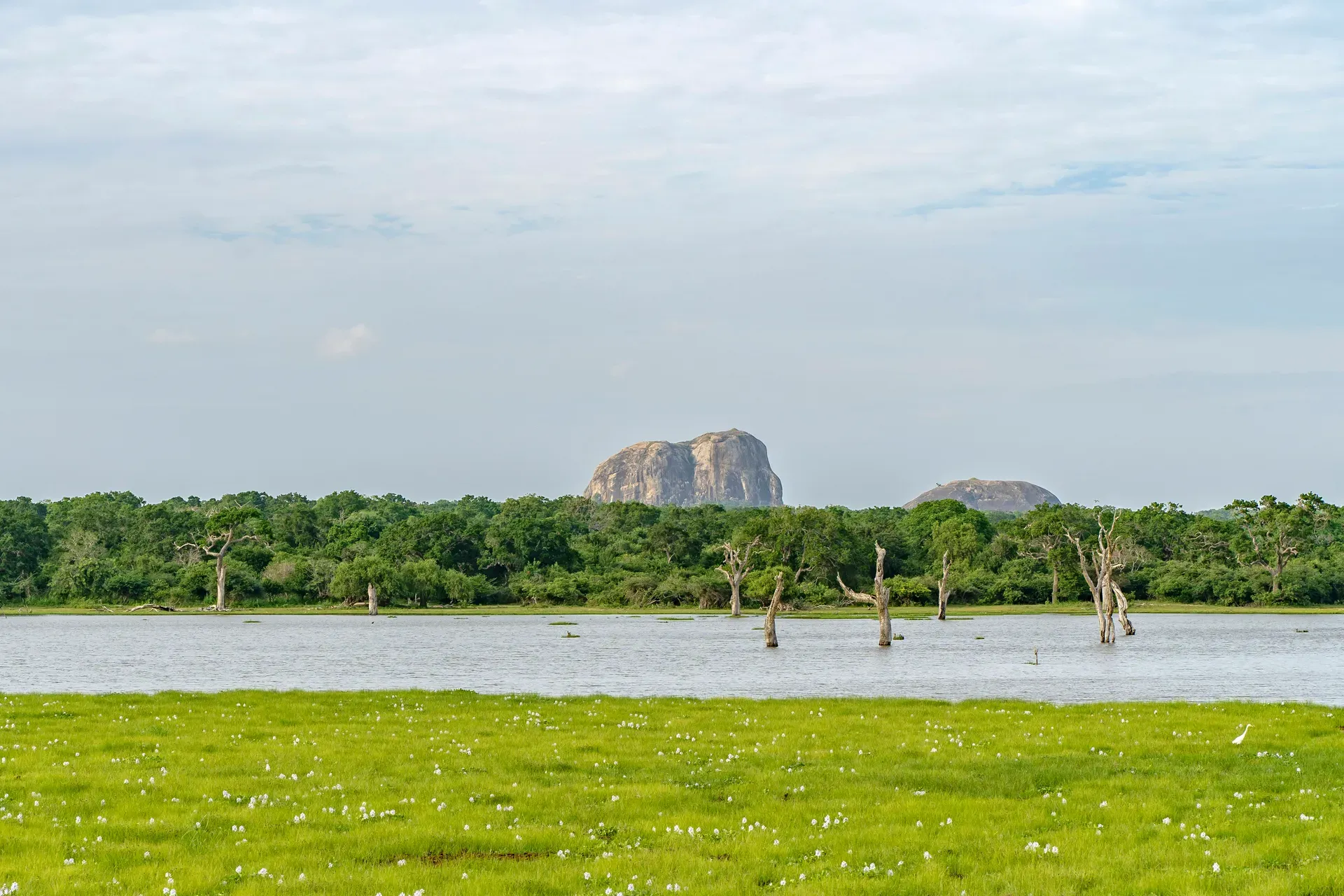
Yala National Park covers 978.8 km² of scrub jungle, dry monsoon forest, grassland and brackish lagoons in Sri Lanka's southeast, stretching from Kirinda in the west to Panama in the east and down to a wild Indian Ocean coast. It's the island's oldest and most visited national park — 646,704 people came in 2024 — and it's 26 times the size of Colombo. You explore it in an open-sided 4x4 jeep, bumping along dirt tracks between five blocks, of which most safaris stick to Block I.
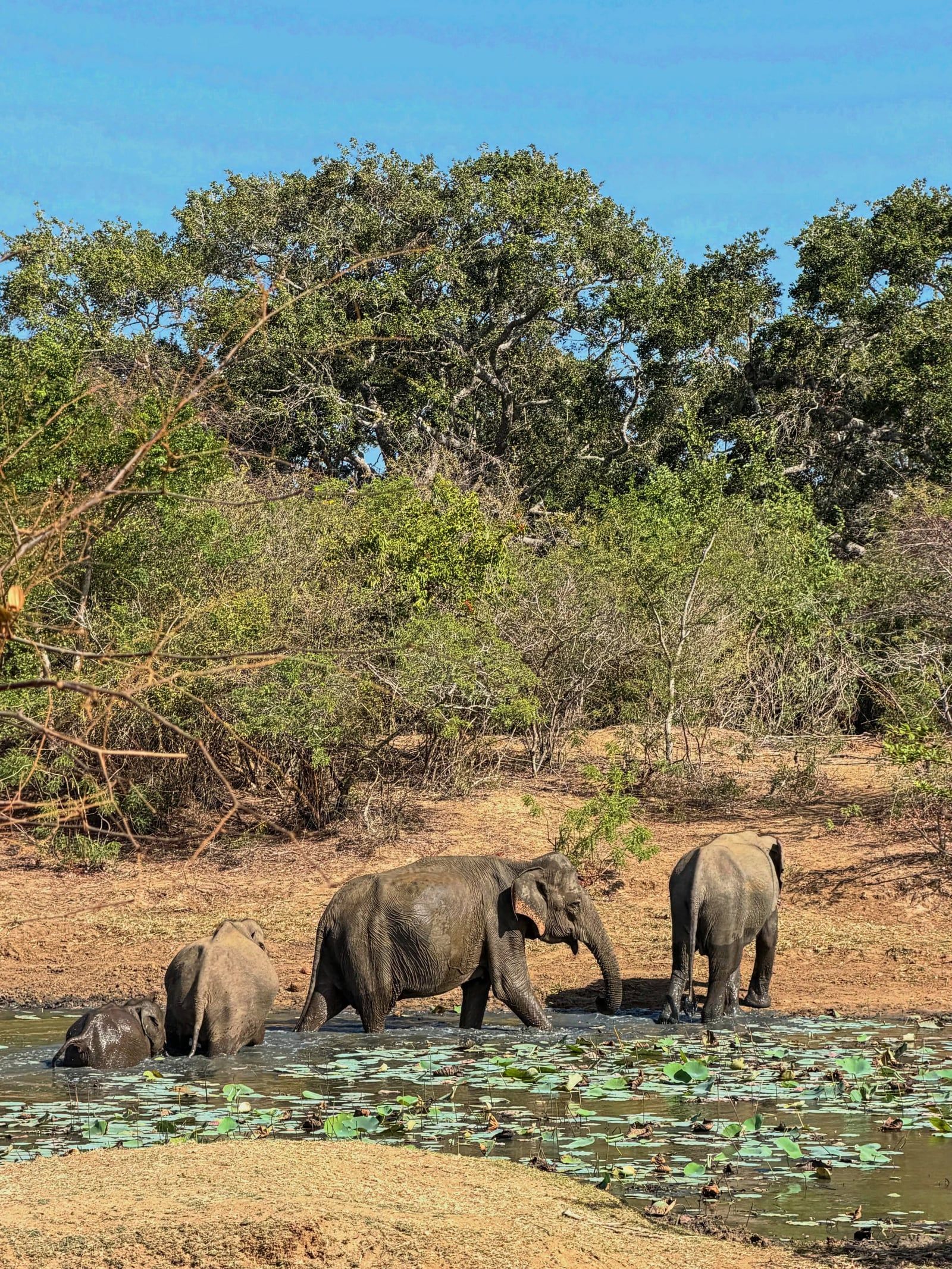
The reason to come is leopards. Block I holds at least one leopard per square kilometre, the densest population recorded anywhere, and the Sri Lankan leopard (Panthera pardus kotiya) is found nowhere else. These cats are unusually relaxed around vehicles, and jeeps relay sightings by radio, so a dawn drive often ends with a leopard sprawled flat on a granite boulder in the first light. Elephants are close to guaranteed; sloth bears, mugger crocodiles, jackals, sambar and 215 bird species round out the list.
There's a downside you should know before booking. Block I is crowded — 200-plus jeeps enter through the main Palatupana gate daily, and "leopard jams" form when dozens converge on one sighting. Go in May or June, or enter through Katagamuwa (20–30 vehicles a day) or Galge in Block V, where you might see two or three jeeps all morning. Either way, be at the gate by 5:30 am. The first hour is when the park earns its reputation.
Yala's modern boundaries began taking shape under British rule. The area was declared a Game Sanctuary in 1894 and a wildlife sanctuary in 1900, though the protection was hollow in practice: colonial elites hunted here through this exact period, shooting the game the sanctuary nominally preserved. On 1 March 1938 the reserve was formally declared a national park, among the first in Sri Lanka, and the shooting stopped.
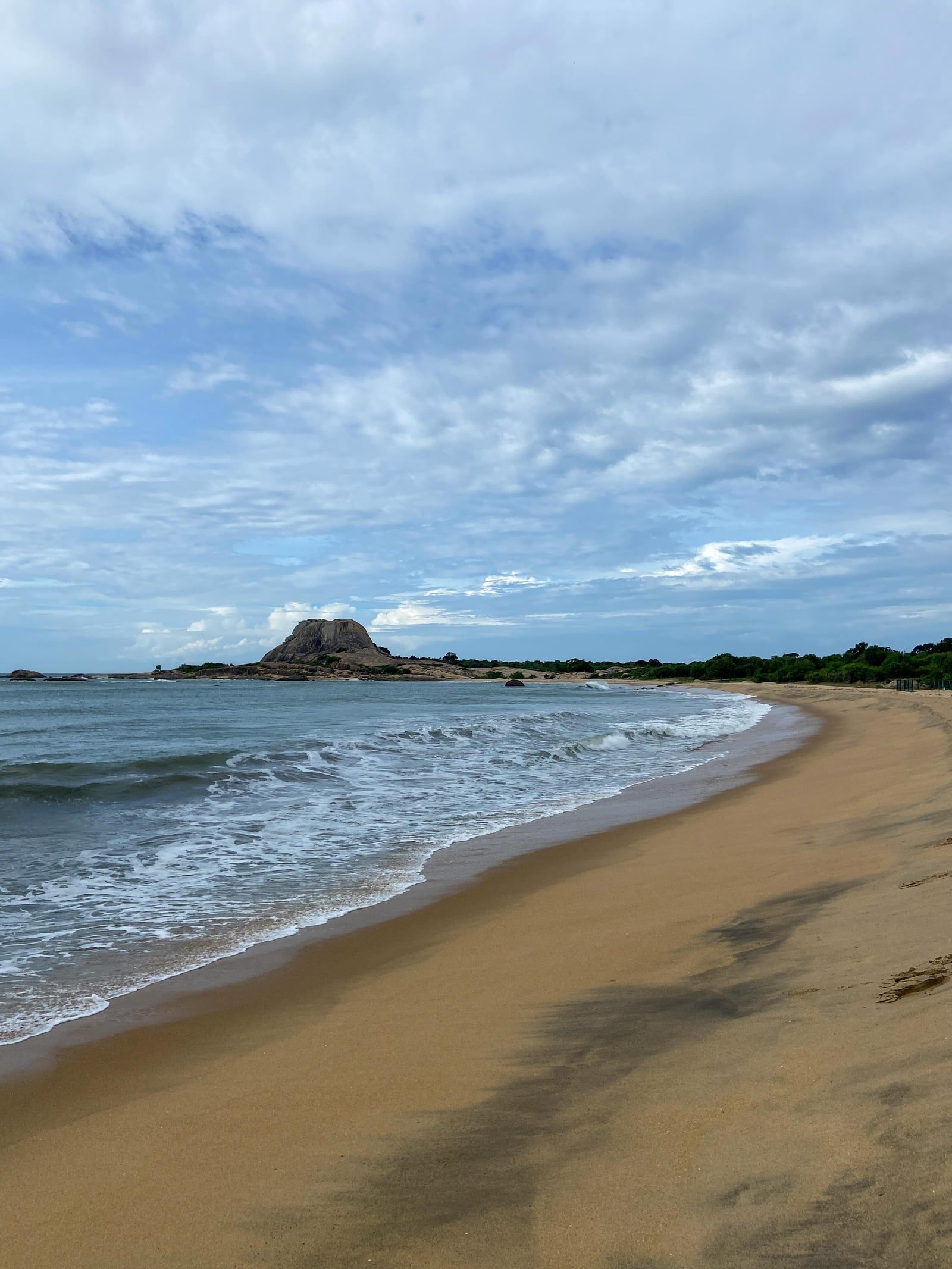
The park's second half-century brought two disruptions. During Sri Lanka's civil war, LTTE activity in the southeast forced some blocks to close to visitors for years at a stretch; they have long since reopened. Then, on 26 December 2004, the Indian Ocean tsunami slammed straight into Yala's unprotected coastline. The wave killed people inside the park, destroyed the stretch around Patanangala, and took a toll on wildlife. The rocky outcrops you pass on the safari route today sit on that same tsunami path.
Long before any of this, the landscape was a monastic heartland. Sithulpawwa Rajamaha Viharaya, inside the park, was founded around the 2nd century BCE and is said to have housed 12,000 monks — reputedly sheltering them through a famine in the 1st century BCE. Its white dagobas still crown a rocky outcrop above the jungle. Caves with ancient inscriptions are scattered through Yala and neighbouring Kumana, the park's contiguous eastern half.
Yala is now the engine of Sri Lankan ecotourism. Foreign arrivals hit a record 214,572 in 2023, and total visitors reached 646,704 in 2024 — near pre-pandemic levels. The pressure shows: speeding jeeps have killed and injured animals on the tracks, and conservation reporting has documented the welfare cost of overcrowding in Block I. The park typically closes for about six weeks of maintenance from September during the drought, though the call is made year by year (it stayed open through 2023). Check the status with any trip booked in that window.
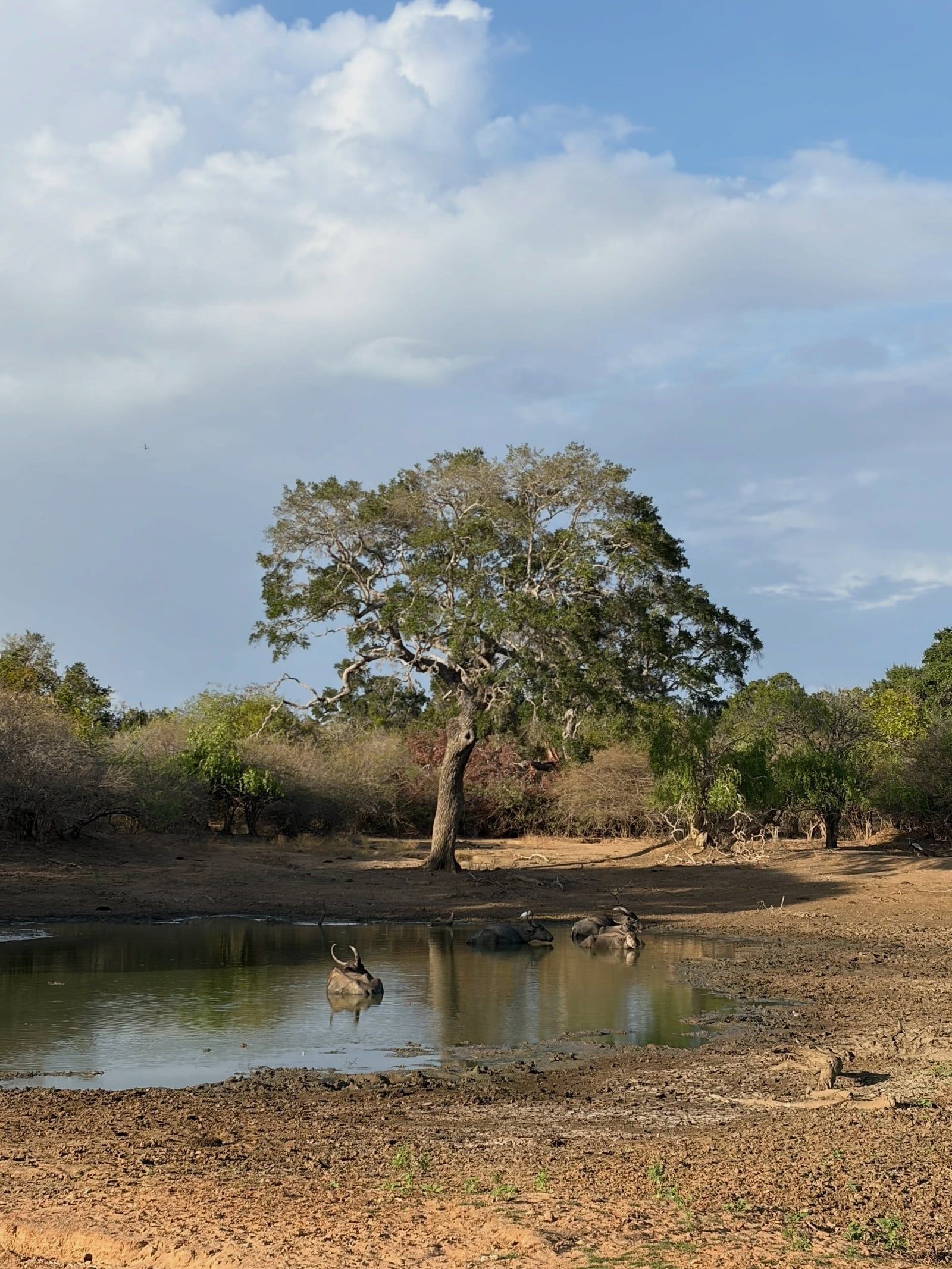
Yala sits in Sri Lanka's dry zone, where rain comes mostly with the northeast monsoon from mid-October to late December and the rest of the year runs hot and thirsty — the average temperature is 26.4°C, and the dry months run hotter. The terrain flips between open plains, dense scrub, dry monsoon forest, grassland and brackish lagoons, stitched together by dirt tracks navigable only by 4x4. On the southern edge, dunes give way to a raw Indian Ocean shoreline broken by the rocky Patanangala outcrop, where heavy surf hits vast boulders. It's the park's designated picnic spot, and a sobering one — the tsunami came ashore here.
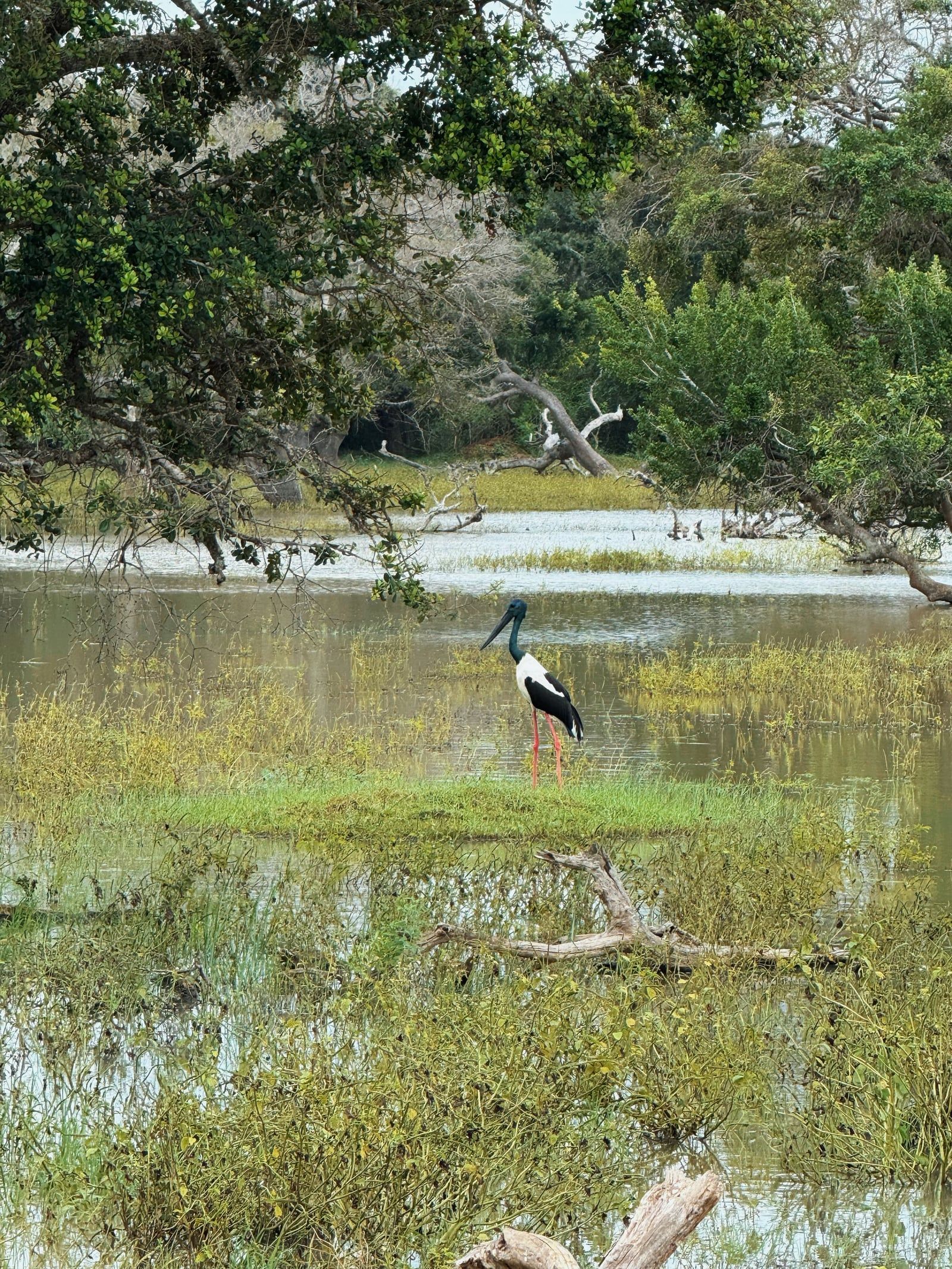
That seasonal dryness is what makes Yala work as a safari destination. From February to July, water levels drop and animals crowd the shrinking lagoons and waterholes, so game viewing concentrates itself. April to July, with low water and short grass, is the peak leopard window. The trade-off: leopards often lie on distant granite boulders, so bring binoculars or a proper zoom lens. The lagoons hold another attraction — 215 bird species, with painted storks, hornbills, bee-eaters and flamingos among the migratory arrivals from Central Asia and the Himalaya between November and January.
Getting around requires the right gate. Palatupana, near Tissamaharama, is the main entrance and the busiest. Katagamuwa, 14 km from Kataragama, reaches the same leopard-rich Block I with a fraction of the traffic. Galge, 30 km from Kataragama, opens onto Blocks 4–5 — quieter country with strong odds on elephants, sloth bears and birds, and lower leopard density than Block I. Pick Galge if you'd trade a leopard chance for near-solitude.
Yala's meaning to Sri Lankans runs deeper than wildlife. The park landscape holds one of the country's concentrations of ancient Buddhist monastic ruins — most prominently Sithulpawwa Rajamaha Viharaya, a rock temple founded around the 2nd century BCE whose name means "the place of the silence of the mind." Pilgrims still climb to its white dagobas for views across the jungle. A 12,000-monk community reputedly lived here, sheltering through a 1st-century-BCE famine, and the surrounding caves carry inscriptions from that era. In a predominantly Buddhist country, a national park that doubles as an ancient sacred landscape carries a different weight than pure conservation land.
Just beyond the boundary, 30 minutes from the Katagamuwa gate, sits Kataragama — one of Sri Lanka's holiest towns, sacred simultaneously to Buddhists, Hindus, Muslims and the indigenous Vedda people. Evening pooja ceremonies draw worshippers of all four faiths to the same shrines, an unusual arrangement even by Sri Lankan standards. Many visitors pair a Yala safari with the drive to Kataragama; cover your shoulders and legs, and remove shoes and hats at the temple buildings.
For the region's economy, Yala is the anchor. Tissamaharama, the gateway town, runs almost entirely on safari logistics — guesthouses, jeep operators, and 5:30 am departures to the Palatupana gate. When drought closes the park, the town feels it immediately. That dependence cuts both ways: it funds conservation, and it pushes drivers to chase sightings harder than the animals can bear.
Block I holds at least one leopard per square kilometre — the highest concentration recorded anywhere on Earth. Yala is the best place to see the Sri Lankan leopard, a subspecies found nowhere else.
Sithulpawwa monastery inside the park, founded around the 2nd century BCE, is said to have housed 12,000 monks and sheltered them through a famine in the 1st century BCE.
The 2004 Indian Ocean tsunami struck Yala's coast directly, claiming human and animal lives around Patanangala. The outcrop still marks the wave's path on today's safari route.
Yala was a sanctuary on paper from 1900 while colonial elites hunted it in practice. The killing only stopped when it became a national park in 1938.
Over 200 jeeps enter Block I through the Palatupana gate daily in peak season. Speeding vehicles have killed and injured animals crossing the tracks — a documented welfare problem.
Of Yala's 215 bird species, many migrate from Central Asia and the Himalaya, arriving with the northeast monsoon from November to January — including flamingos.
The park spans 978.8 km², about 26 times the area of Colombo. Yet nearly all safaris happen in a single one of its five blocks.
Yala is famous for having the world's highest leopard density — at least one leopard per square kilometre in Block I. It's also Sri Lanka's oldest and most visited national park, with 646,704 visitors in 2024, and protects ancient Buddhist ruins including Sithulpawwa monastery, founded around the 2nd century BCE.
The area was declared a Game Sanctuary in 1894 and a wildlife sanctuary in 1900, but was formally established as a national park on 1 March 1938 — among the first in Sri Lanka. Ironically, colonial elites hunted in the sanctuary during its early years.
The park covers 978.8 km² (377.9 sq mi) across Sri Lanka's Southern and Uva provinces, divided into five blocks. That's roughly 26 times the size of Colombo, though almost all safari activity concentrates in Block I.
Yala lies in Sri Lanka's arid southeast, about 260 km southeast of Colombo, between Kirinda in the west, Kataragama in the north, Panama in the east and the Indian Ocean to the south. Tissamaharama, about 20 minutes from the main Palatupana gate, is the usual base town.
The park records 44 mammal and 215 bird species. Leopards are the headline, elephants are close to guaranteed at dry-season waterholes, and sloth bears appear at dawn and dusk. Crocodiles, jackals, sambar, wild buffalo, painted storks, hornbills and bee-eaters are all commonly seen.
February to July is the dry season, when shrinking waterholes concentrate wildlife. April to July offers the best leopard odds thanks to low water and short grass. May and June give you the same viewing quality with far fewer jeeps than the December–April crowds.
Usually, but not always. The park traditionally closes for about six weeks from September to mid-October for maintenance during the drought. The decision is made year by year — it stayed open all of 2023 — so check the current status before booking anything in that window.
No. Every vehicle entering must be a 4x4 safari jeep with a registered guide or tracker, hired at the gates or through hotels and operators. You can arrange this independently rather than buying a package tour, but you can't drive yourself in.
The Indian Ocean tsunami struck the park's unprotected coastline on 26 December 2004, claiming both human and wildlife lives, particularly around the Patanangala stretch. The outcrop and beach on today's safari route sit directly on the wave's path.
Palatupana is the main gate but busiest, with 200-plus jeeps daily. Katagamuwa reaches the same leopard-rich Block I with only about 20–30 vehicles — that's the one to pick if you're staying near Kataragama. Galge serves the quieter Blocks 4–5, where you might see only two or three jeeps all morning.
Browse verified tours with free cancellation and instant confirmation.
Find Tours