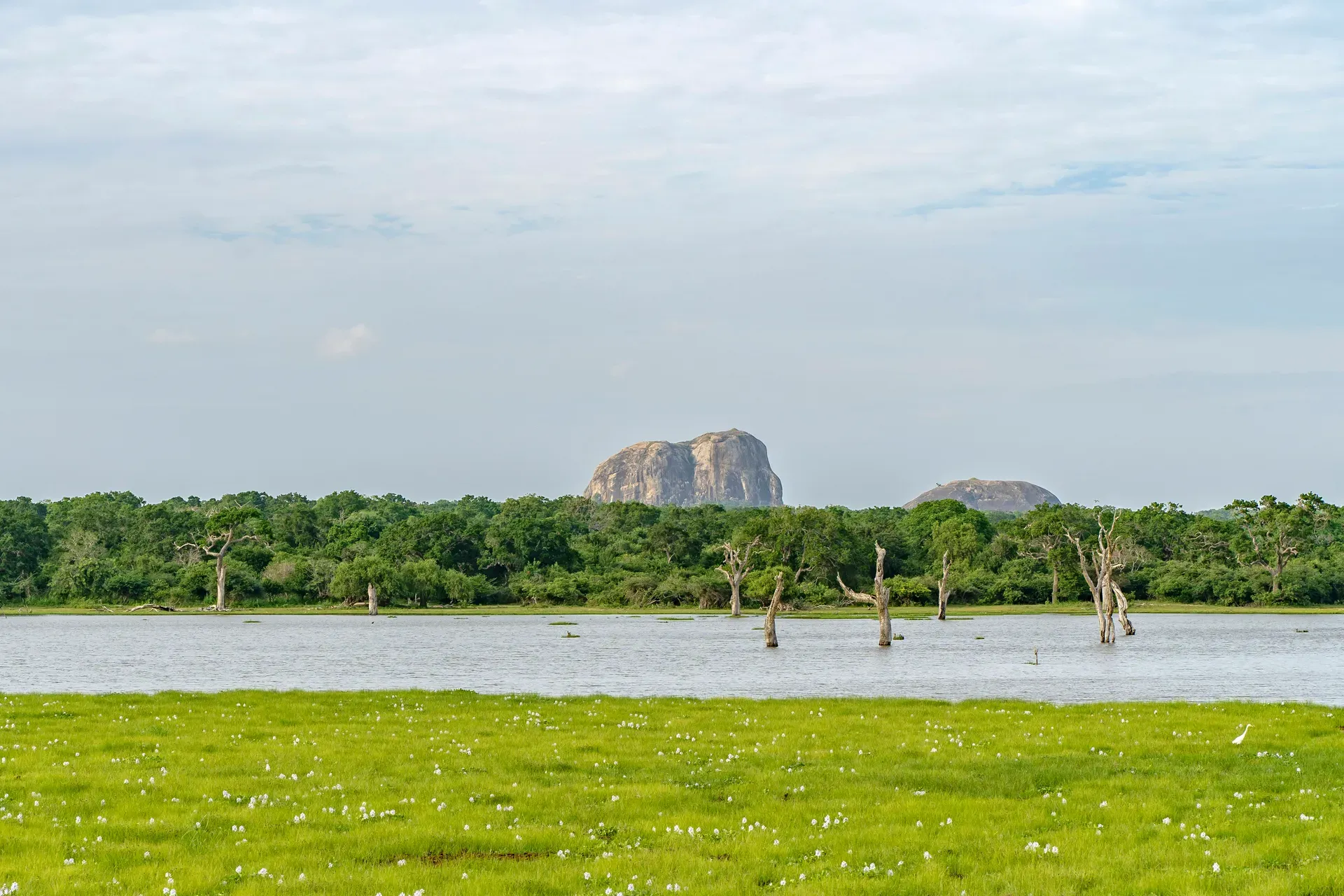
Yala National Park holds the planet's densest leopard population — at least one per square kilometre in Block I — and you track them by open 4x4 past granite boulders, lagoons and a wild Indian Ocean coast. Sri Lanka's oldest park also shelters elephants, sloth bears and 215 bird species across 979 km² of scrub jungle.
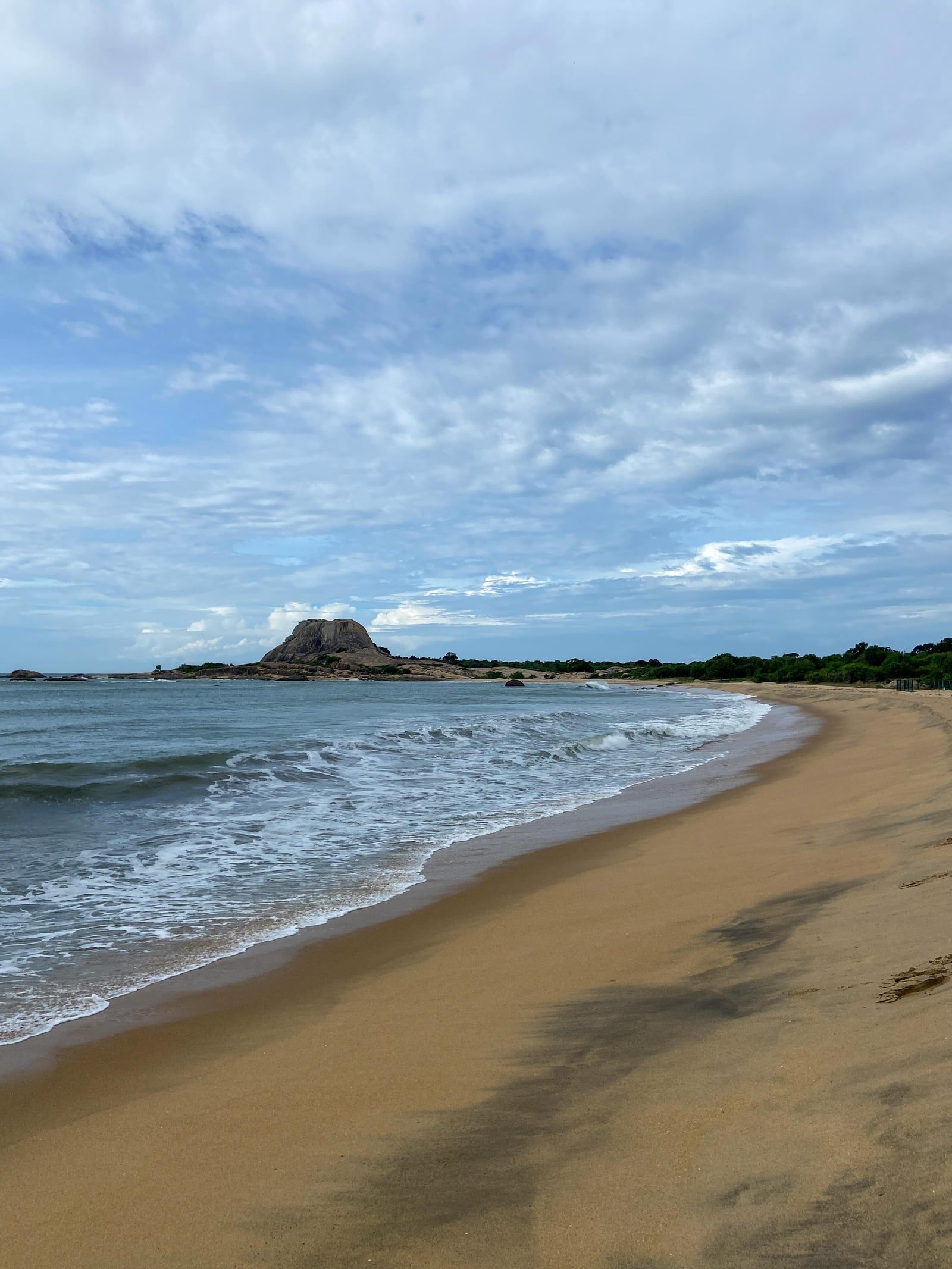
Find Guided ToursSri Lanka's oldest and most visited national park sits in the island's arid southeast, about 260 km from Colombo, straddling the Southern and Uva provinces. Yala covers roughly 979 km² across five blocks — scrub jungle, dry monsoon forest, grasslands, brackish lagoons and a wild Indian Ocean coastline. For scale, the whole park is 26 times the size of Colombo. You explore it the only way you can: by open 4x4 jeep, entering at Palatupana, Katagamuwa or Galge.
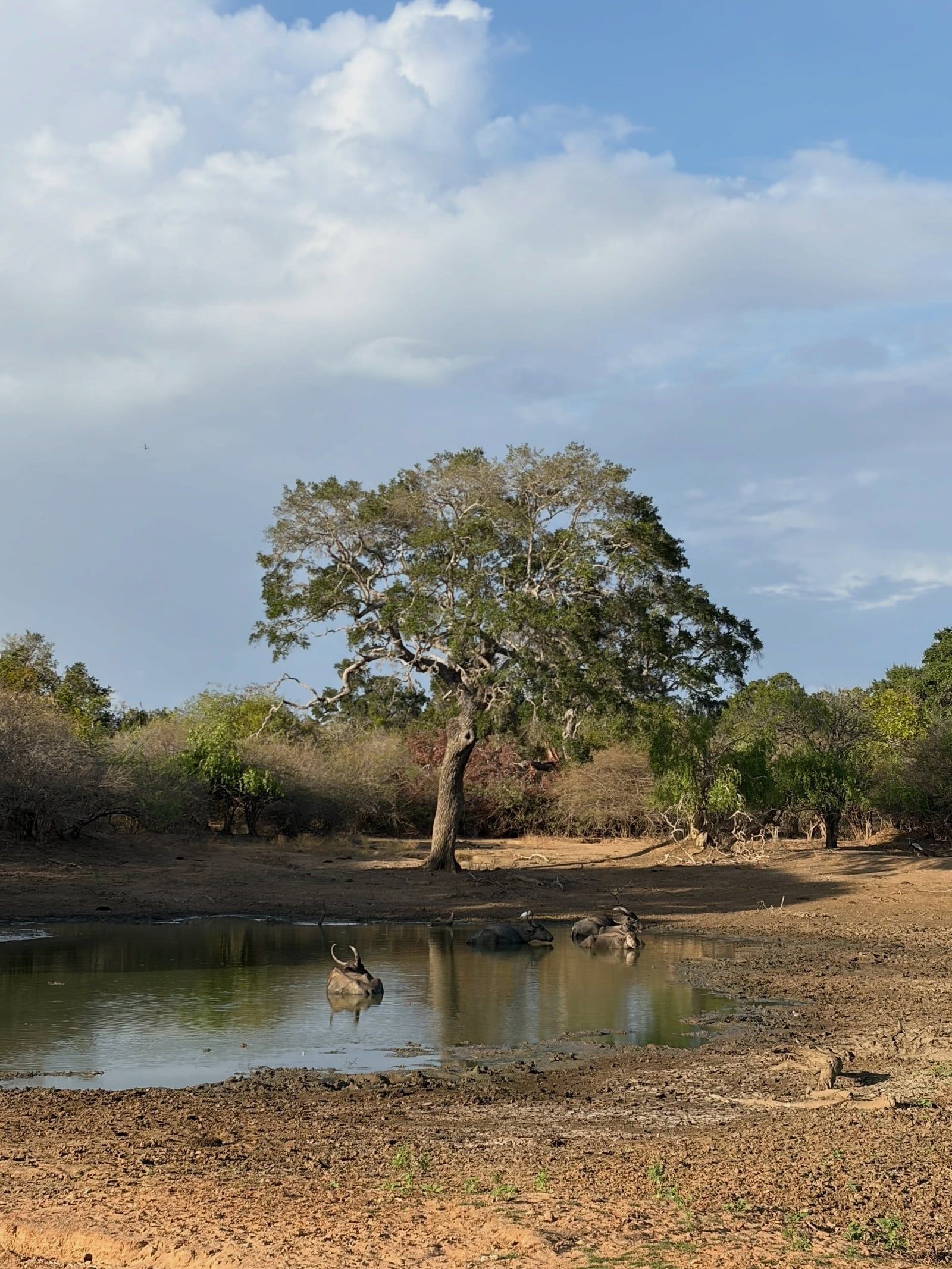
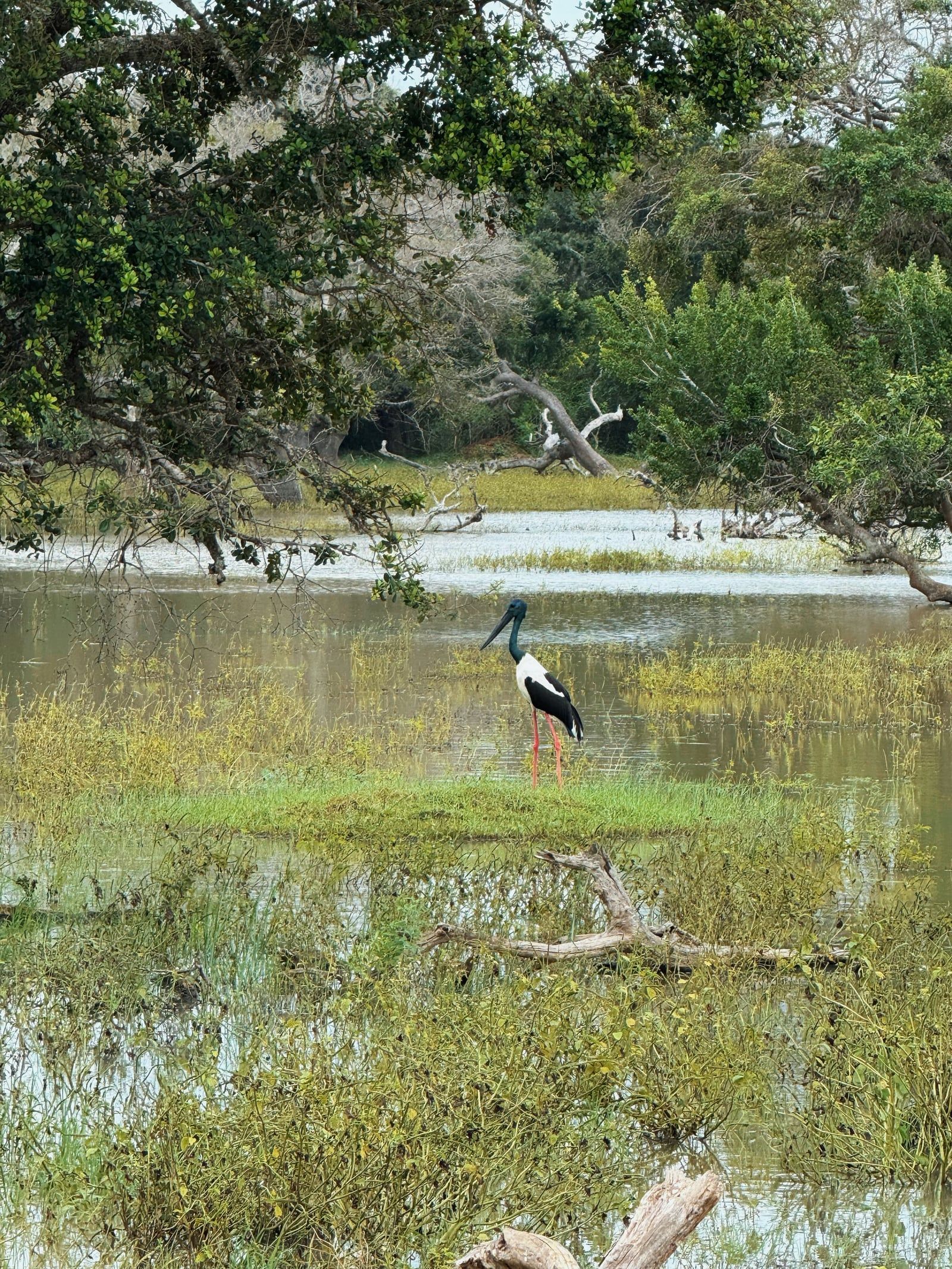
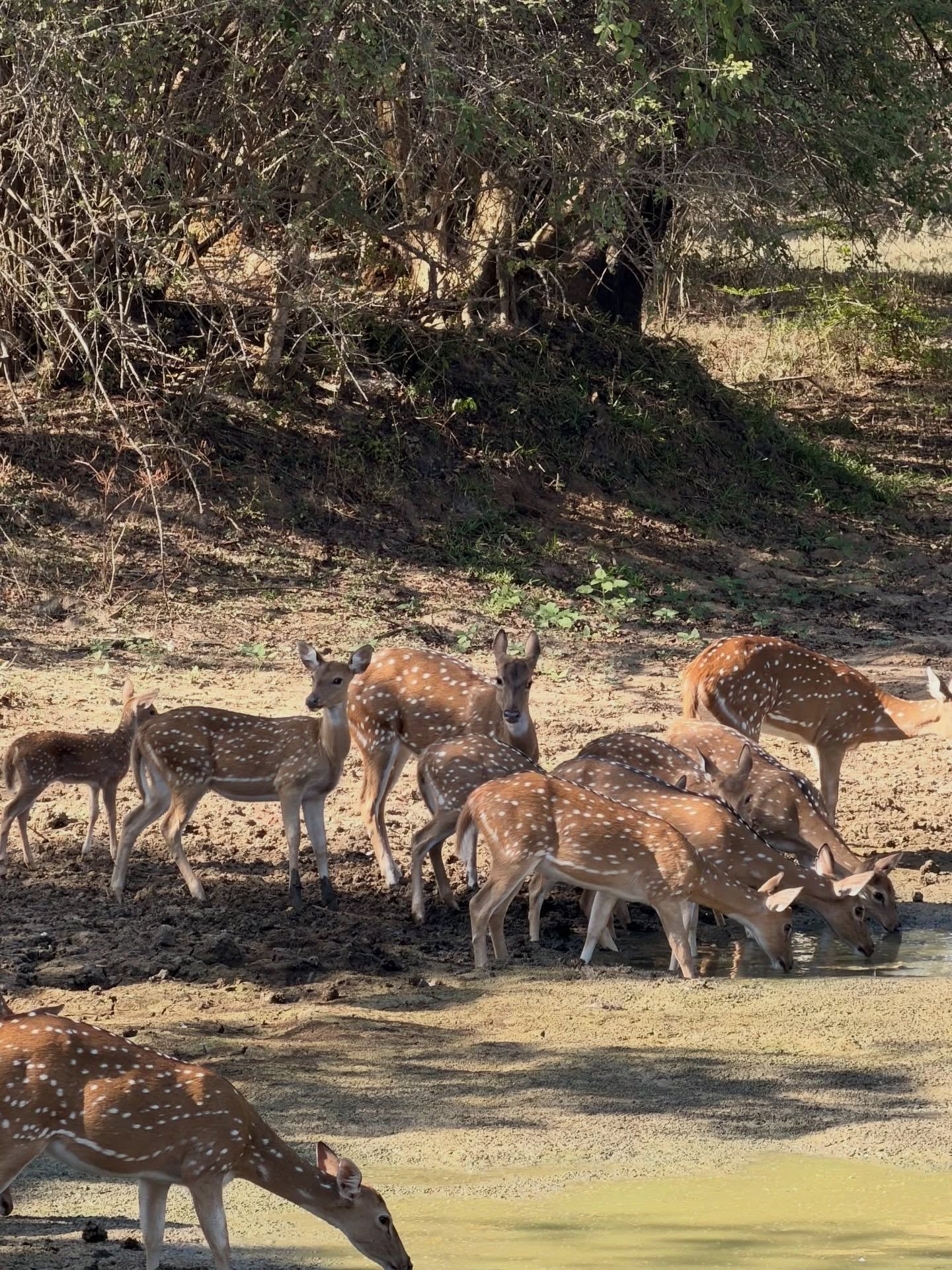
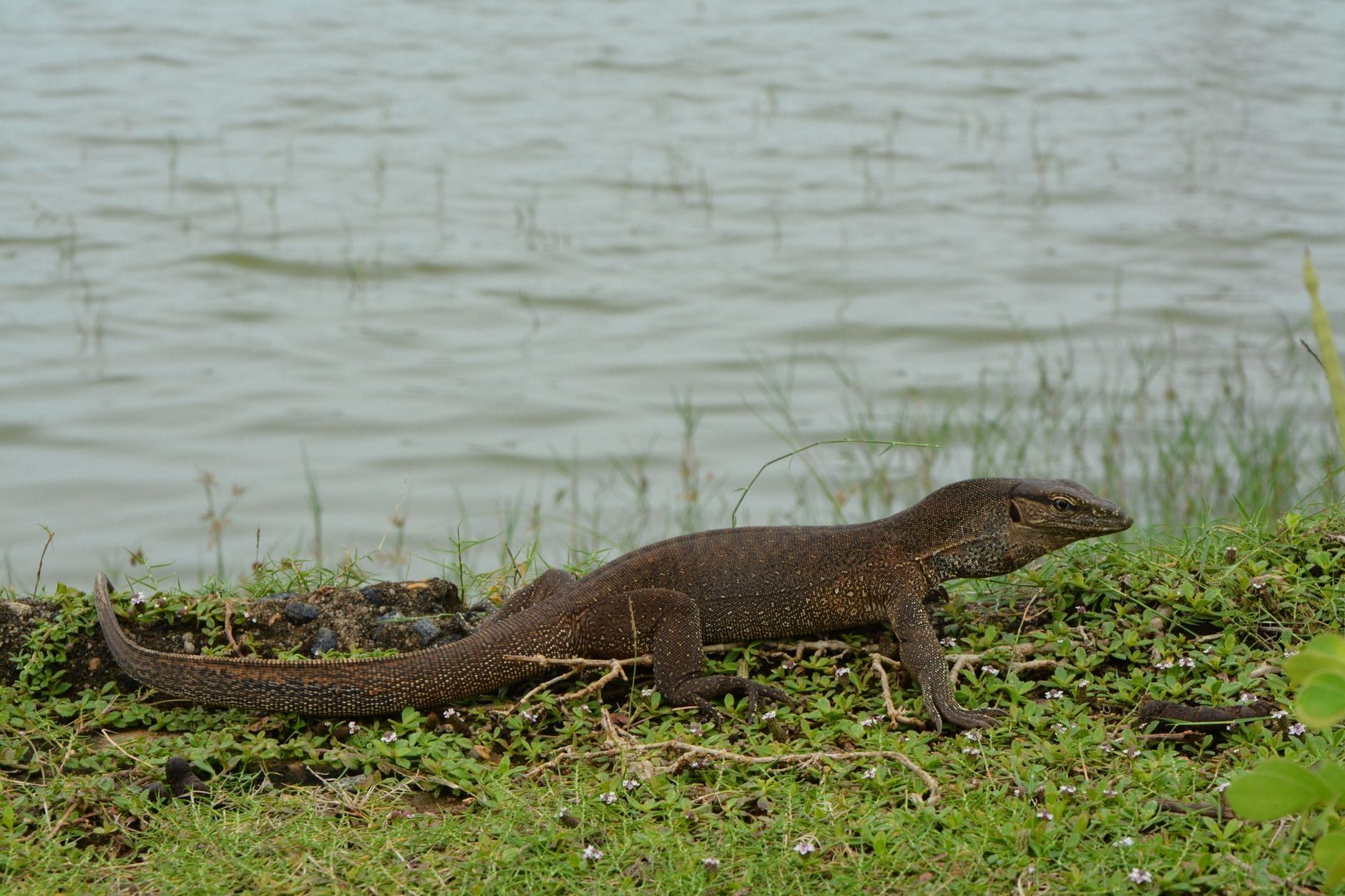
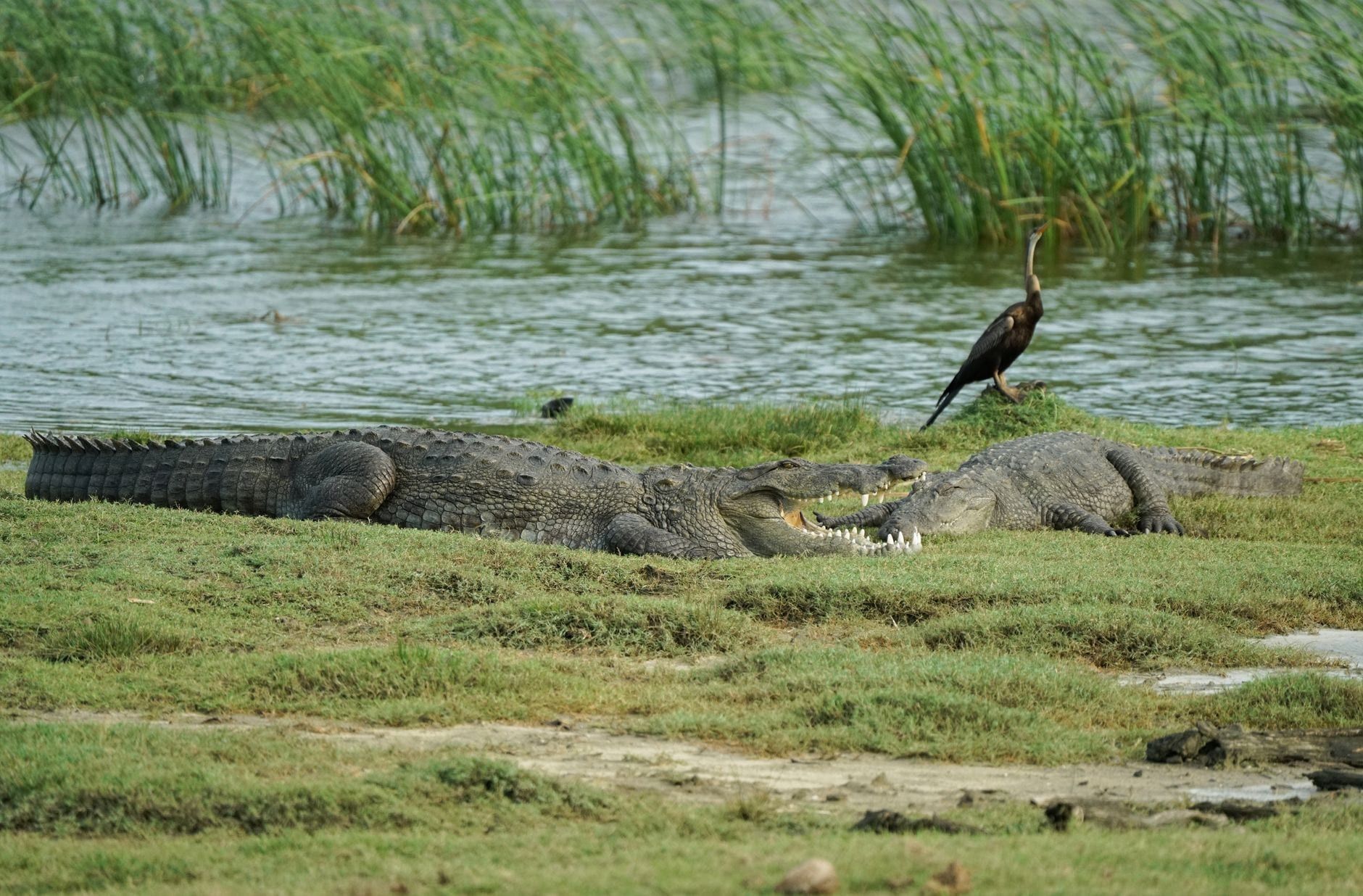
Leopards. Yala has the highest leopard density on Earth — Block I alone holds at least one leopard per square kilometre — which makes it one of the best places anywhere to see the endemic Sri Lankan leopard (Panthera pardus kotiya). The park's 44 mammal species include elephants, sloth bears, sambar and jackals, alongside crocodiles and 215 recorded bird species. Some 646,704 people visited in 2024, nearly back to pre-pandemic levels.
The land itself carries history. Sithulpawwa Rajamaha Viharaya, a Buddhist rock temple inside the park, dates to around the 2nd century BCE and is said to have housed 12,000 monks. That ancient monastic landscape survived a colonial chapter that could have ended differently: the area was declared a Game Sanctuary in 1894 and a wildlife sanctuary in 1900, yet was ironically used as a hunting ground for the colonial elite.
Formal protection came on 1 March 1938, when Yala was declared a national park — among the first in Sri Lanka. Some blocks later closed during the civil war and have since reopened. In 2004 the Indian Ocean tsunami devastated the coastal stretch, claiming both wildlife and human lives. Today Yala is Sri Lanka's second-largest park and the cornerstone of its safari tourism.
Discover the full history and cultural significance on our About page.
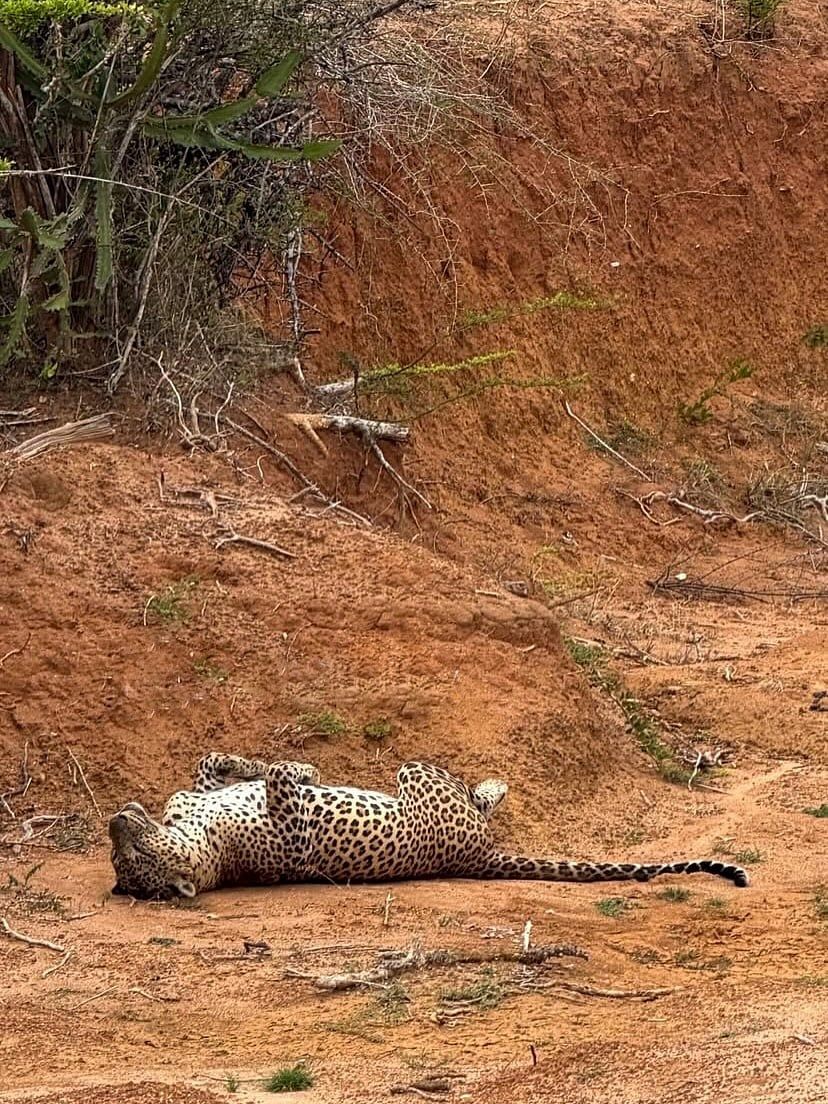
Block I holds at least one leopard per square kilometre — the highest concentration on Earth. Jeeps relay sightings by radio, and these Sri Lankan leopards are oddly relaxed around vehicles, so dawn drives often end with one sprawled across a granite boulder in soft light. April to July is the peak window.
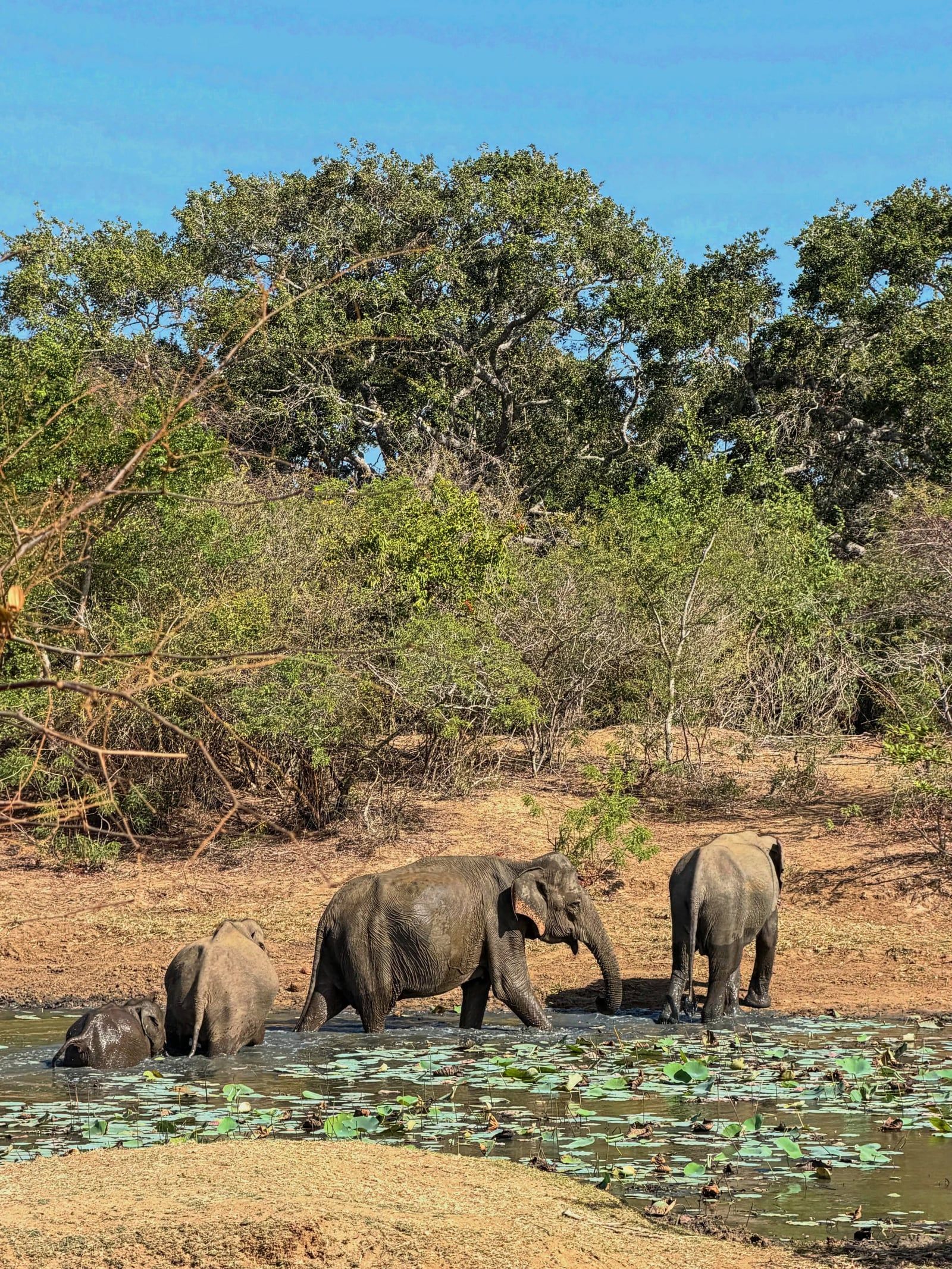
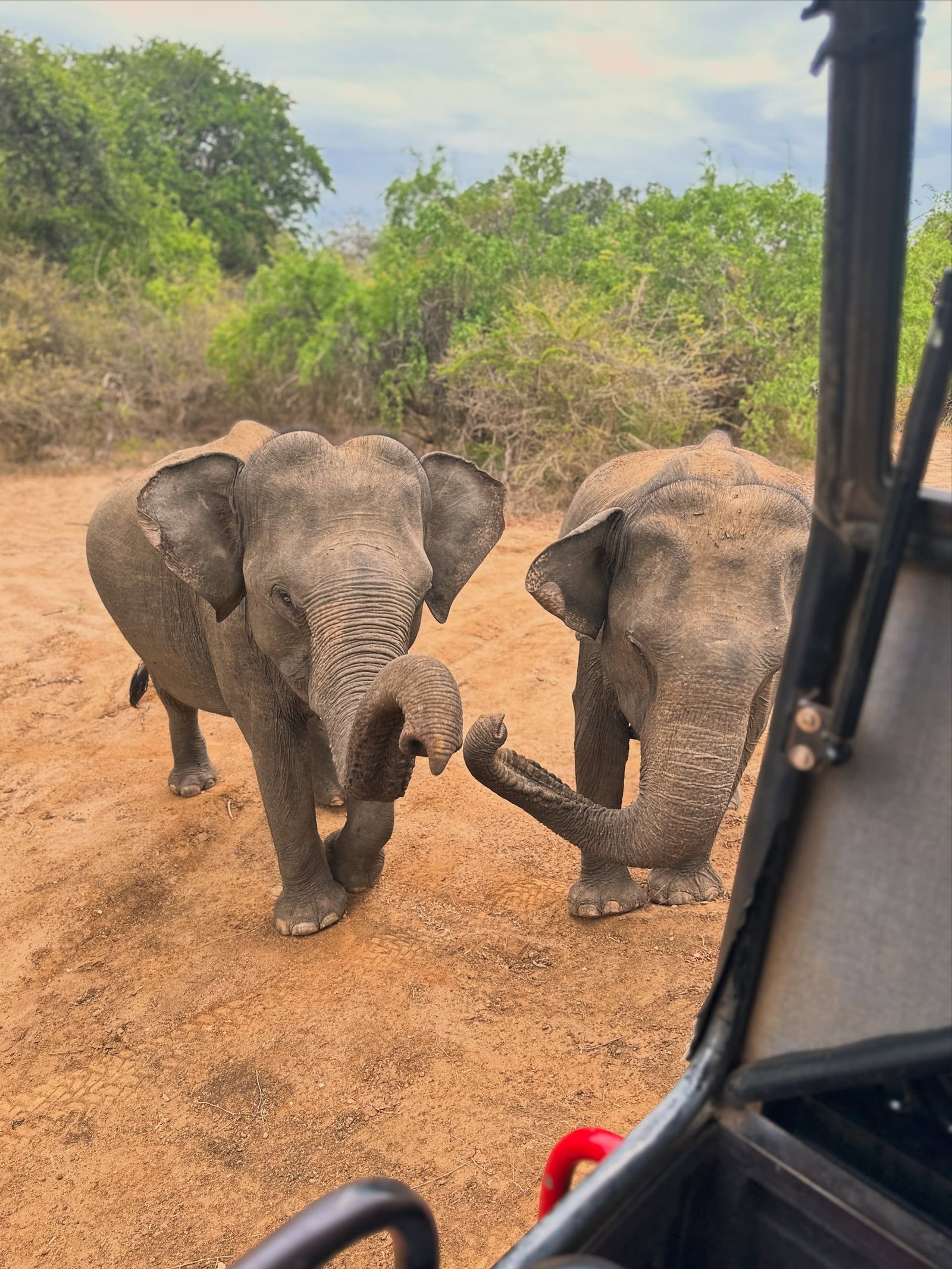
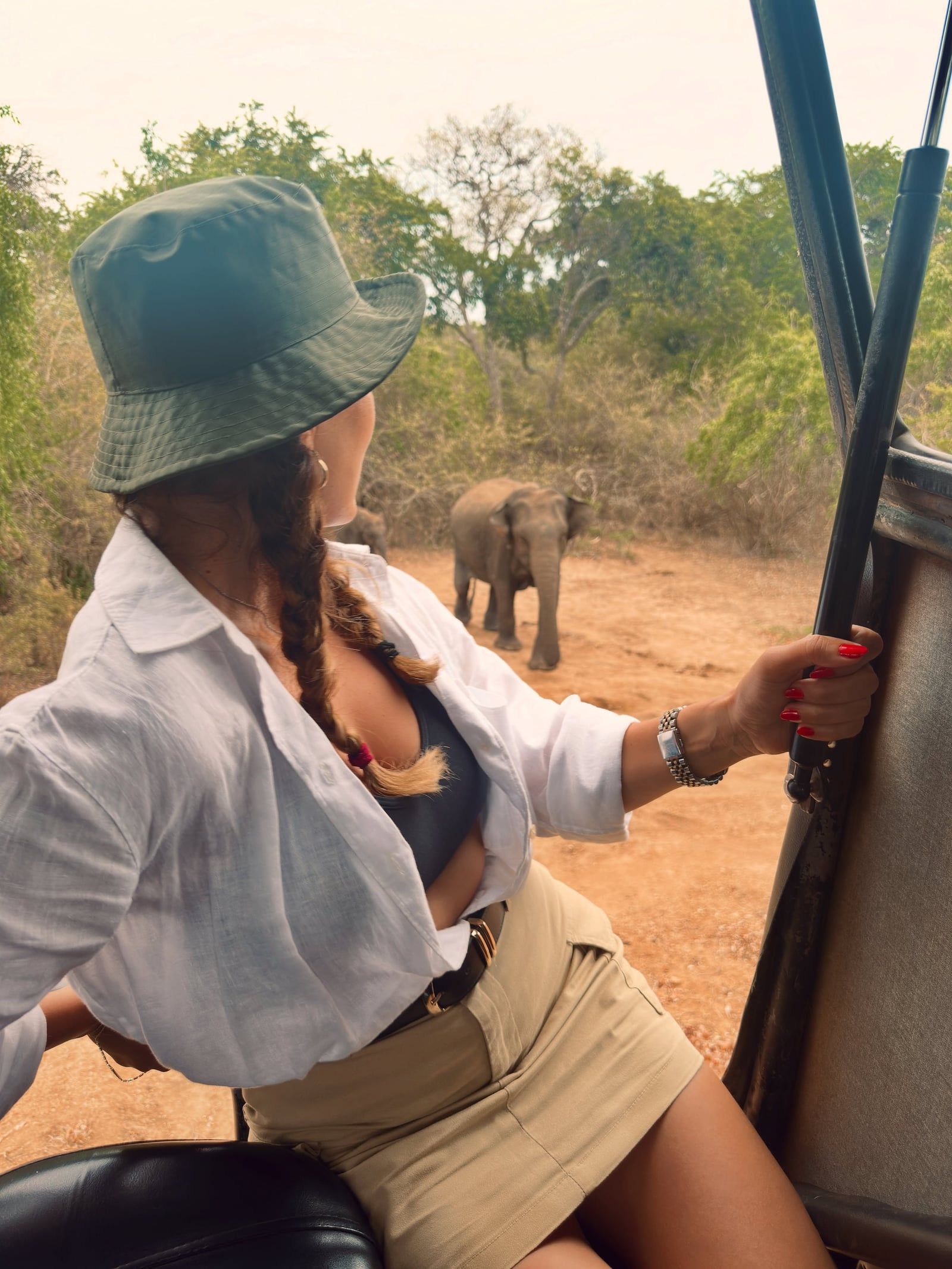
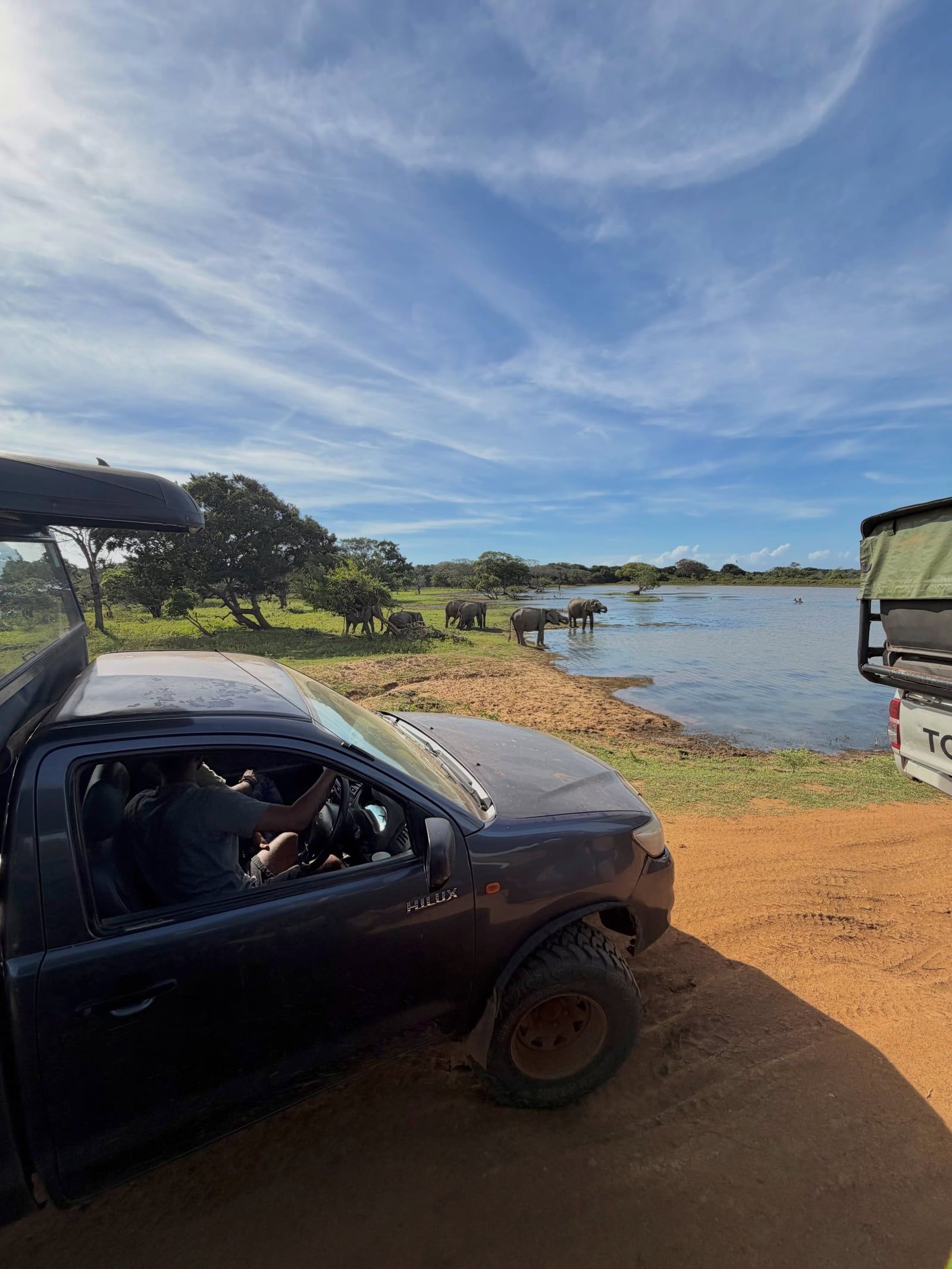
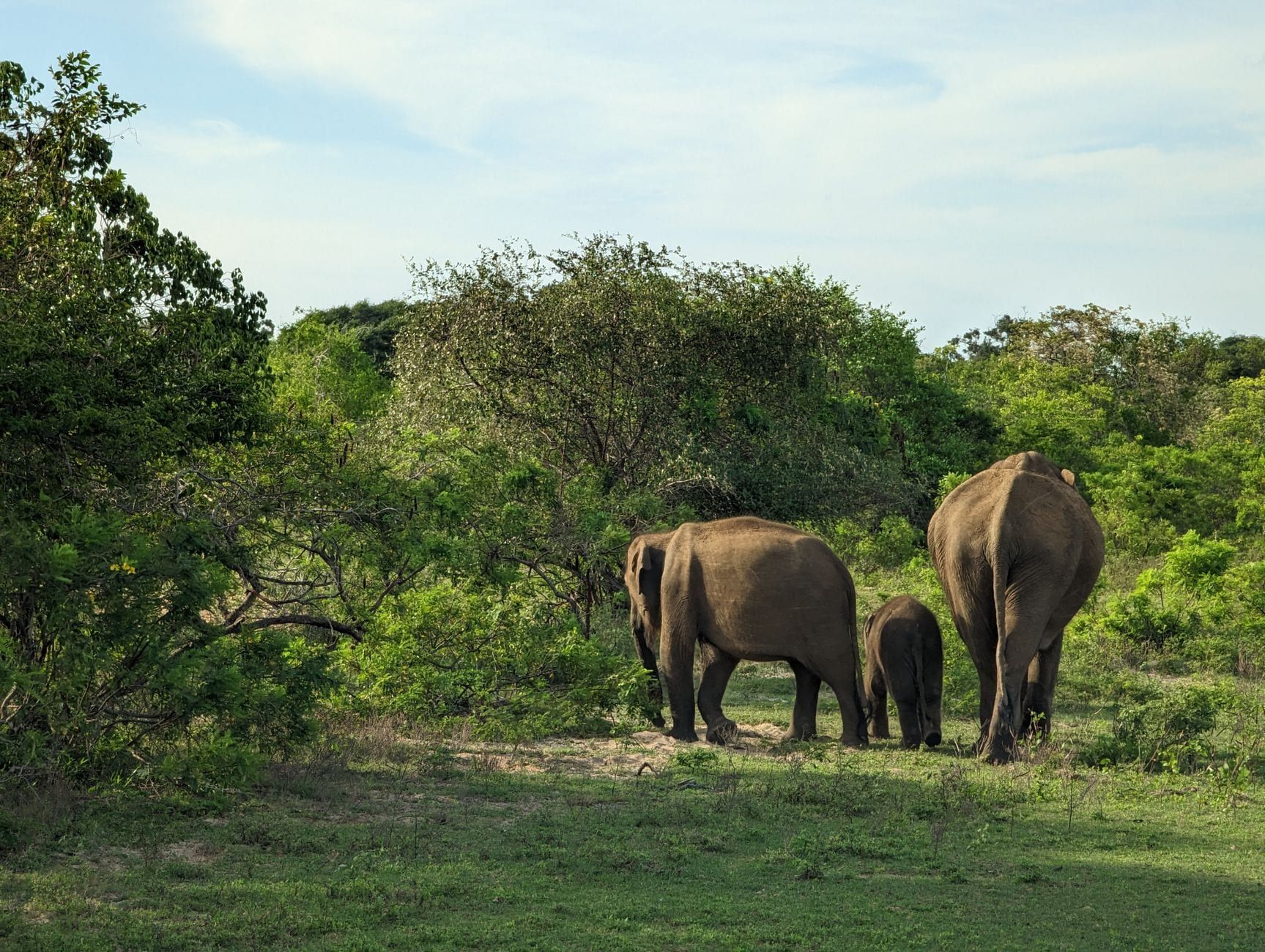
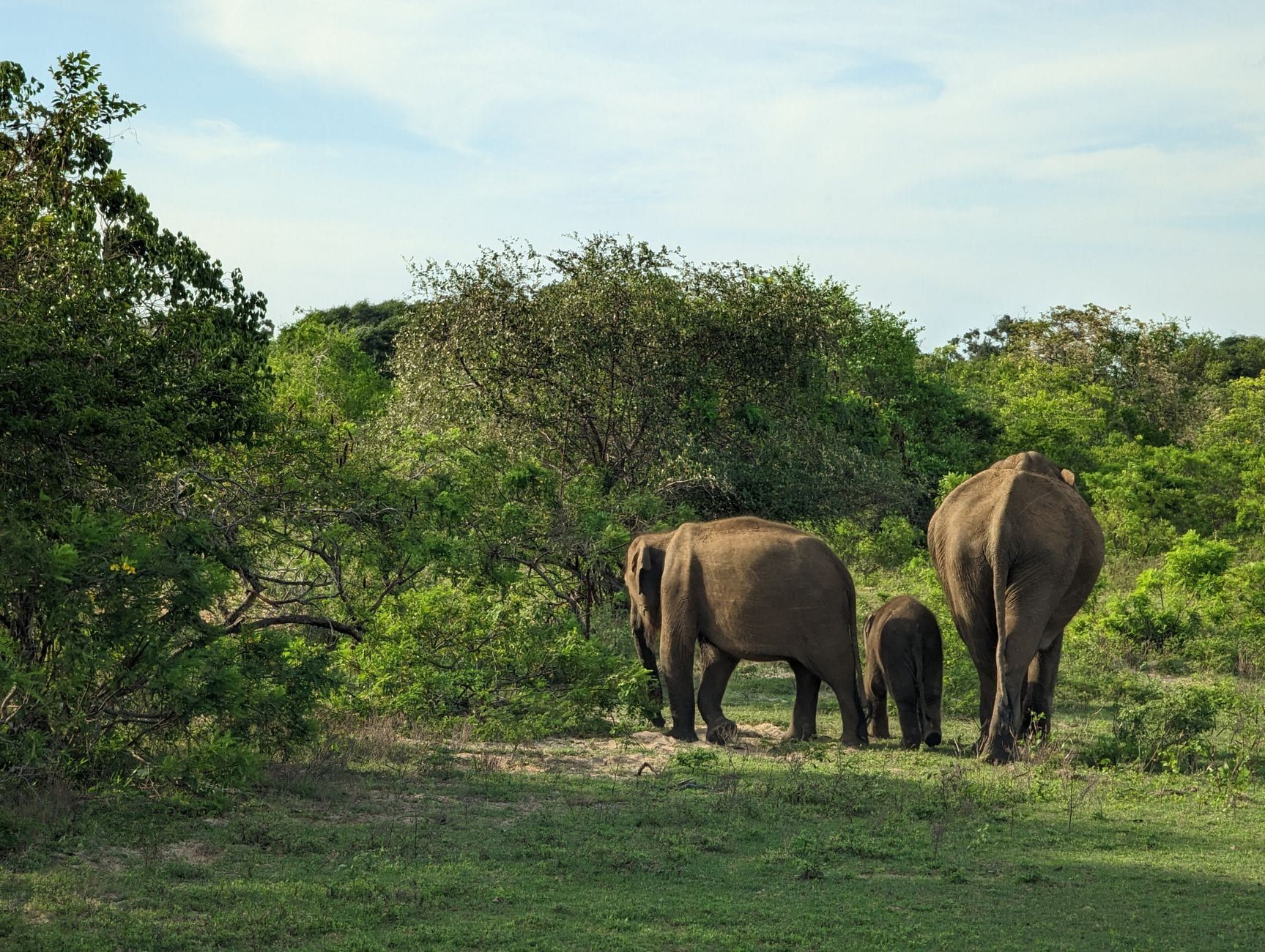
From February to July, shrinking lagoons pull whole families into the open. Cut the engine and you'll hear grunts, huffs and trumpets as a herd bathes — an elephant sighting is basically a given on any Yala safari. Bring a zoom lens; the action can unfold across a wide pan.
Sithulpawwa Rajamaha Viharaya sits inside the park, its white dagobas crowning a rocky outcrop with panoramas over the wilderness. Founded around the 2nd century BCE, the monastery reputedly sheltered 12,000 monks during a 1st-century-BCE famine. Few safaris anywhere mix archaeology and game driving like this.
Join the pre-dawn queue at Palatupana for the 6 am opening — soft light, cool air, and the park's most active wildlife hour before the heat settles in. With 200-plus jeeps entering daily, the scramble is part of the experience. Prefer fewer vehicles? Enter through Katagamuwa or Galge instead.
Book a leopard safari from $12.61, with hotel pickup, jeeps capped at six travelers, and free cancellation up to 24 hours.
Swipe to see more
 Free Cancellation 12h
 Free Cancellation
 Free Cancellation
 Free Cancellation 24h Free Cancellation 12h Free Cancellation Free Cancellation
 Free Cancellation
February to July is the prime window, when shrinking waterholes concentrate wildlife and April–July delivers the best leopard odds; May and June add thinner crowds. Avoid September to mid-October, when drought closures hit.
Heart of the dry season. Water levels drop, animals crowd the shrinking lagoons, and April into May sits inside the peak April–July leopard window — low water, short grass, excellent sightings.
Dry conditions continue through July, the tail of the peak leopard months, and June brings far fewer jeeps than the December–April rush. August edges toward the season's end.
The riskiest stretch. The park traditionally closes about six weeks from September to mid-October for drought maintenance (2023 stayed open — check first), then the northeast monsoon arrives mid-October.
Good weather and top birding — hundreds of migratory species from Central Asia and the Himalaya reach the lagoons from November to January — but December–April draws the year's biggest jeep queues at Palatupana.
Yala National Park opens daily, year-round, from 6:00 am to 6:00 pm. Ticket counters run 6:00 am to 4:00 pm, with last morning entry at 11 am and last evening entry at 5 pm. Every vehicle must be out by 6:00 pm — staying past dark is prohibited and enforced. There's also a daily midday closure from 12 pm to 2 pm; full-day visitors wait it out at designated resting zones. Hours can shift slightly with season and weather, and in severe drought years the park closes for roughly six weeks around September (in 2023 it stayed open, so check current status before booking a September or early-October trip).
| Category | Price |
|---|---|
| Foreign adult | USD 25 |
| Foreign child (6–12 years) | USD 15 |
| Foreign child (under 6) | Free |
| Foreign SAARC-country adult | USD 20 |
| Foreign SAARC-country child (6–12 years) | USD 10 |
| Foreign group fee (per vehicle) | USD 10 |
| Vehicle entrance fee | LKR 300 |
| Local adult | LKR 150 |
| Local child (6–12 years) | LKR 100 |
| Local student | LKR 20 |
| Local group fee (per vehicle) | LKR 400 |
An 18% tax is added to the entry total. Example: two foreign adults plus one child (6–12) pay USD 50 + USD 15 + USD 10 group fee = USD 75, plus USD 13.50 tax = USD 88.50, plus the LKR 300 vehicle ticket. Foreigners can pay in USD or the LKR equivalent. Every visitor needs a DWC entry permit, buyable at the gate counters or reserved online at dwc.lankagate.gov.lk, and every jeep must carry a registered guide/tracker. Jeep hire is a separate cost: official pre-booking lists Block 1 at LKR 16,900 half-day / LKR 28,100 full-day, and Blocks 4–5 (Galge) at LKR 19,800 / LKR 29,700; private half-day jeeps run about LKR 7,500–10,000. Overnight stays in park bungalows require advance booking through Colombo and double the ticket price. For current prices, call the Government Information Centre on 1919.
For complete schedules and ticket prices, visit our Hours & Fees page.
Almost everyone travels first to Tissamaharama, the gateway town, then takes a 20-minute tuk-tuk ride to the Palatupana Gate — expect 4.5–5 hours by road from Colombo, or longer by bus or train. Katagamuwa and Galge are the alternative entrances.
📍 Yala National Park has no street address; the main entrance is the Palatupana Gate, reached via the gateway town of Tissamaharama, roughly 260 km southeast of Colombo (coordinates 6°22'22N 81°31'01E).
A private driver covers the 260–280 km route in about 4.5–5 hours door-to-door, and you can stop along the southern coast on the way. Coming from the south-coast beaches like Mirissa or Hiriketiya, the drive is around 3 hours; from Ella it's about 2.5 hours at roughly USD 50. This is the fastest and most flexible option.
Frequent buses run from Colombo to Tissamaharama, taking roughly 6–7 hours depending on traffic and weather. It's the cheapest way there, and air-conditioned private buses or tourist shuttles cost a bit more. From Tissa, a 20-minute tuk-tuk ride gets you to the Palatupana Gate.
Regular services link Ella to Tissamaharama via Wellawaya on the A2/A23 routes, usually with one or two changes through Wellawaya or Hambantota. The trip averages 2.5–4 hours depending on transfers, so it's a practical morning run from the hill country. A Bandarawela–Kataragama bus also passes through the area.
There's no direct train to Yala. Ride the scenic southern coastal line from Colombo Fort to Matara, about 7.5 hours, then continue by bus or taxi to Tissamaharama. Alternatively, take the hill-country train toward Haputale (departures from 9:45 am) and bus down via Wellawaya. Scenic but slow — budget 8+ hours total with connections.
Booking platforms list domestic flight-plus-taxi combinations between Colombo and the Yala area, cutting the journey to a fraction of road time. Options are limited and prices vary, so verify schedules when booking. Best saved for travelers short on time.
For detailed transport options and routes, visit our Directions page.
Arrive at Palatupana by 5:30 am to be among the first jeeps through the 6 am opening — that first hour delivers cool air, soft light, and the park's most active wildlife before the heat builds. Ticket counters stay open only until 4 pm, and the last morning entry is 11 am. If you're not an early riser, the 2–6 pm slot still works; just don't expect the same sightings.
Katagamuwa reaches the same leopard-rich Block 1 as Palatupana but sees 20–30 vehicles a day instead of 200+, so you'll spend your morning watching animals rather than watching other jeeps. It's about 45 minutes from Tissamaharama and 14 km from Kataragama. Want near-total solitude? Galge serves Blocks 4–5, where a whole safari might involve two or three other vehicles — though leopard odds are lower there.
When dozens of jeeps converge on one leopard, ask your tracker to move on — speeding and crowding are documented animal-welfare problems in Yala, and jeeps have killed animals crossing tracks. Lingering quietly at lagoons and waterholes instead often pays off with elephants, sloth bears, and crocodiles. Pick an operator who respects speed limits, and never push your driver for a closer look.
Entry fees get an 18% tax on top, so two foreign adults with one child aged 6–12 pay USD 88.50 all-in (USD 75 base plus tax), along with the separate LKR 300 vehicle ticket. Children under 6 enter free. Confirm whether your jeep price covers the tracker and permits before departure, and call the Government Information Centre on 1919 to verify current rates — you can pay in USD or LKR equivalent.
The park traditionally closes for about six weeks from September to mid-October for drought-season maintenance, though it's decided year by year — 2023 stayed open all year. Verify the status before booking anything in that window. Keep Udawalawe (63 km away, near-guaranteed elephant herds) or Bundala as backup. The mid-October-to-December monsoon is also risky: rain makes game viewing harder and can close roads.
Operators generally advise a minimum age of about five, and one guide calls Yala outright unsuitable for under-5s — multi-hour rides on rough dirt tracks in dry-season heat wear small children down. Older kids do fine on a shorter morning drive; request a seat-belted vehicle and keep them seated and quiet near animals. Under-6s enter free, and ages 6–12 pay the reduced child rate of USD 15.
A 2nd-century-BCE Buddhist monastery inside the Yala landscape — its name means 'the place of the silence of the mind'. White dagobas crown the rocky outcrop with sweeping views, and the drive in doubles as a game drive. It once housed 12,000 monks.
One of Sri Lanka's holiest pilgrimage towns, sacred to Buddhists, Hindus, Muslims and the indigenous Vedda people. Evening pooja ceremonies draw worshippers of all faiths, and the town doubles as a practical base — Katagamuwa gate is just 14 km away.
Sri Lanka's premier elephant park, built around the Udawalawe reservoir, where large herds are near-guaranteed on open grassland drives. The landscape is quieter and more open than Yala's Block I — a strong pick for a second safari or a stop en route to the hills.
Read what travelers share about their experience visiting Yala National Park — from practical tips to personal highlights.
Planning advice, comparisons, and practical tips.
Yala and Udawalawe sit about 65 km apart in Sri Lanka's dry southeast, yet they hand you two completely different safaris. Yala offers the best…
February to July is the best time to visit Yala National Park. That's the dry season in Sri Lanka's arid south-east, when shrinking waterholes pull…
Yala National Park holds the densest leopard population on Earth, and that single fact shapes every drive through its 979 square kilometres of scrub…
Yala draws 646,704 visitors a year, and every one of them has to sleep somewhere within reach of the park gates. That decision matters more here than…
Entry is USD 25 per foreign adult and USD 15 per child aged 6–12, plus a USD 10 group fee per vehicle, an LKR 300 vehicle ticket, and 18% tax — a family of two adults and one child pays USD 88.50 at the gate. The jeep costs extra: official pre-booked rates run LKR 16,900 for a half-day in Block 1 (LKR 28,100 full-day), while private half-day jeeps generally go for LKR 7,500–10,000. Foreigners can pay in USD or LKR, and the Government Information Centre (1919) can confirm current prices.
The park runs daily from 6:00 am to 6:00 pm, with ticket counters open 6:00 am to 4:00 pm and every vehicle out by 6:00 pm sharp. There's a midday closure from 12 to 2 pm, last morning entry at 11 am, and last evening entry at 5 pm. Arrive at the gate by 5:30 am to be among the first jeeps in at opening.
April to July gives you the best odds — low water and short grass concentrate wildlife at shrinking waterholes, and Block I holds at least one leopard per square kilometre, the highest density on Earth. May and June pair great sightings with far fewer jeeps than the December–April peak. Overall, February to July is the dry-season sweet spot.
A private car or taxi covers the 260–280 km in about 4.5–5 hours and costs USD 110–200. Buses to Tissamaharama, the gateway town, take 6–7 hours at LKR 200–1,200, then it's a 20-minute tuk-tuk ride to the Palatupana Gate. From Ella, buses via Wellawaya run 2.5–4.5 hours.
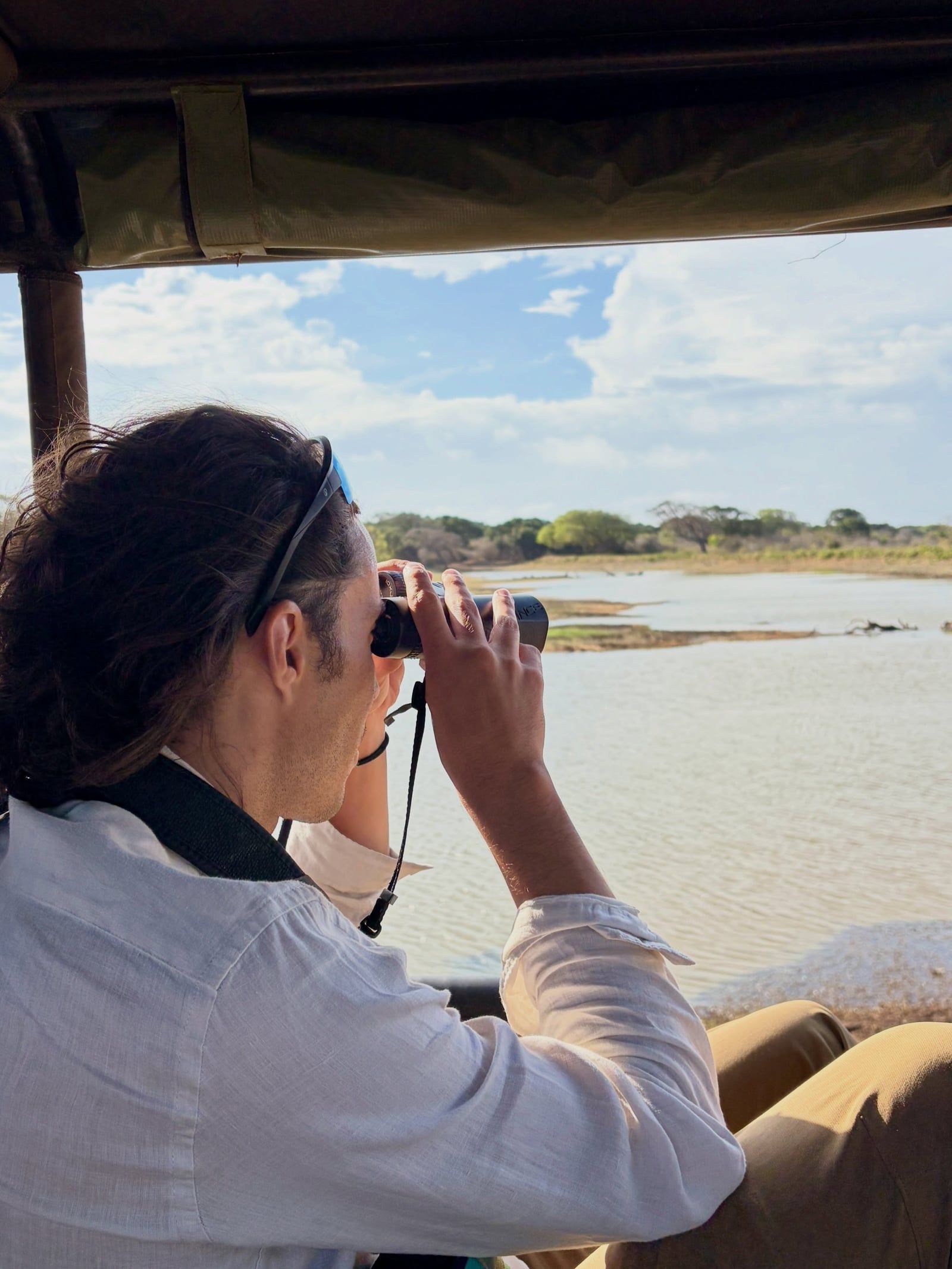
Plenty of water, snacks in airtight containers, sun protection, and a first-aid kit — facilities at the gates and inside the park are basic. Wear light clothing in neutral colours like khaki or olive, and bring binoculars or a zoom lens, since leopards often rest on distant granite boulders. Note that alcohol, cigarettes, drones, and flash photography are all prohibited inside the park.
Not in any conventional sense — everyone travels in standard open-sided 4x4 jeeps on rough dirt tracks, with no ramps, boardwalks, or adapted vehicles. Wheelchair users who can transfer into a jeep with assistance can still do a game drive, but should book a private jeep and confirm boarding help in advance. Older visitors generally manage fine, since all viewing is seated and no walking is required.
No — every vehicle entering must be a 4x4 safari jeep carrying a registered guide or tracker, hired at the gates or through hotels and tour operators. You can still organise everything independently: buy your entry permit at the gate counter (6 am–4 pm) or reserve it online via the DWC's system at dwc.lankagate.gov.lk. For fewer crowds at the same leopard-rich Block 1, use the Katagamuwa gate, which sees 20–30 vehicles a day versus 200+ at Palatupana.
Traditionally yes — the park usually shuts for about six weeks from September to mid-October for maintenance during the drought. The closure is decided year by year, though: in 2023 it stayed open all year. Check the current status before booking, and keep Udawalawe (63 km from Tissamaharama) or Bundala as a backup.
Browse verified tours with free cancellation and instant confirmation.
Find Tours


