Yala draws 646,704 visitors a year, and every one of them has to sleep somewhere within reach of the park gates. That decision matters more here than at most safari destinations: where you stay fixes which gate you use, how early your jeep gets inside, how much you pay, and whether wildlife turns up on your doorstep at dusk. Sri Lanka's oldest national park divides into five blocks with entrances at Palatupana, Katagamuwa and Galge, and the right bed depends on which of those you want to be queuing at before dawn. (If you're still building the trip itself, start with our guide to Yala's blocks, history and gates.)
Prices split cleanly into three tiers: budget guesthouses in Tissamaharama at USD $25–80 a night, mid-range hotels and camps at $80–300, and all-inclusive luxury lodges from $300 up to $1,500. This guide walks through all three, area by area, then covers the part most guides skip — permits, jeep logistics and the booking calendar.
Where to Stay Near Yala: Top Picks at a Glance
Match your priority to a property first, then work backwards to the price. These six picks cover every tier and every travelling style; the sections below explain each in full.
| Your priority | The pick | Nightly rate |
|---|---|---|
| Best overall luxury | Wild Coast Tented Lodge | USD $700–1,200 |
| Privacy and romance | Chena Huts (14 pool huts) | £900–1,500 |
| Wildlife-first guiding | Leopard Trails Yala Camp | USD $300–500 |
| Mid-range with wildlife on the grounds | Cinnamon Wild Yala | USD $130–280 |
| International-brand reliability | Hilton Yala Resort | from ~USD $200 |
| Best budget base | Tissa guesthouse + independent guide | $25–60 + ~$70/person |
The single decision that shapes everything else is gate proximity versus price versus safari freedom. A lodge at the Palatupana gate gets you first through the barriers and lets the property run your drives; a Tissa guesthouse costs a third as much and hands you control over which guide and which gate. There's no wrong answer, only trade-offs, and which animals you're hoping to see should influence it as much as your wallet.
One more thing to pin down before you compare rates: what's bundled. All-inclusive prices at the top lodges cover twice-daily game drives, all meals, transfers and park fees, so a $700 rate can be closer to true cost than a $150 room-only rate once you add safaris at $55–75 per jeep and US$25 permits per person. Always compare totals, not headline prices.
Choosing Your Base: The Areas Around Yala, Compared
No competitor connects the dots, so here it is plainly: where you sleep determines which gate you enter, and the gate determines your safari. Palatupana is Yala's busiest entrance precisely because most tourist accommodation clusters near it; the Katagamuwa and Galge gates reach quieter blocks with fewer vehicles and, at Galge, often better leopard odds in Blocks 4–5.
Tissamaharama (Tissa): the practical gateway
Tissa is the budget-friendly hub, a small town centred on a lake about 20–30 minutes' drive from the Palatupana gate. Most safari operators and the 5:30 am jeep departures are based here, so you get the widest choice of guesthouses and, more usefully, of independent licensed guides. The trade-off is simple: no wildlife at your door and a pre-dawn drive to the gate. A 4:30 am pickup from a Tissa guesthouse still reaches Palatupana by 5:15–5:30 am — early enough to be among the first vehicles inside at the 6 am opening. It's also the practical base for getting to Yala by bus or train, since Colombo buses terminate here.
Palatupana and the Kirinda coast: park-edge luxury
The coastal strip near Palatupana is where the design-led lodges sit, 5–15 minutes from the main gate. Chena Huts is about three minutes away; Wild Coast Tented Lodge sits moments from the Block 1 entrance. Staying here buys you the earliest jeeps through the gate and, at several properties, wildlife moving through the buffer zone between the ocean and the park boundary. You pay for it — this is where the $300-plus rates live — and you're locked into the busiest entrance, with 200-plus jeeps a day queuing alongside yours in peak season.
Katagamuwa and Kataragama: the quiet rear gate
Katagamuwa, on the park's north-eastern side near the sacred city of Kataragama, is the quieter alternative entrance to Block 1 — roughly 20–30 vehicles a day against Palatupana's 200-plus, reaching the same leopard-rich country. It's about 45 minutes between the two gates, so don't book a Palatupana lodge expecting to use Katagamuwa casually. Smaller camps cluster here, and the pairing works well if you want to combine the safari with Kataragama's multi-faith pilgrimage temples and evening pooja ceremonies. From Tissa, Katagamuwa is about a 45-minute drive.
Inside the park: DWC bungalows
No tourist lodges operate inside Yala itself. The only in-park beds are basic government bungalows — Heenwewa and Mahaseelawa among them — run by the Department of Wildlife Conservation and bookable directly through the DWC, usually months ahead. They're spartan, but you're the first vehicles in the park each morning, and overnight stays simply aren't possible any other way. Note that overnight permits double the entry ticket price. For everything else on the park itself, see our hours and entry fees guide.
| Tissamaharama base | Park-edge lodge | |
|---|---|---|
| Time to gate | 20–30 min drive (Palatupana) or ~45 min (Katagamuwa) | 3–15 min to Palatupana |
| Nightly cost | $25–80 | $130–1,500 |
| Safari arrangement | You pick the independent guide and gate | In-house drives, often bundled with permits and fees |
| Wildlife on property | None — town setting | Buffer-zone lodges get elephants and more at dusk |
| Best for | Budget and control | First jeeps in, minimum logistics |
Luxury Safari Lodges and Tented Camps (USD $300+)
At this tier the rate is all-inclusive: twice-daily game drives, all meals, transfers, park fees and often the minibar. Compare true totals rather than sticker prices, because a $400 rate that covers everything can undercut a $200 room plus separately booked safaris. Four properties earn their money; here's what each does best — and where each falls short.
Wild Coast Tented Lodge
Cocoon-shaped tents sit between jungle and ocean moments from the Block 1 (Palatupana) entrance, with all-inclusive rates running roughly USD $700–1,200 per night. Drives are with the lodge's own naturalists, so guiding quality is consistent. Best for a first safari where you want the whole thing handled. The honest downside: you're at the busiest gate, so peak-season mornings mean queues alongside everyone else.
Chena Huts by Uga Escapes
Fourteen private-pool huts, three minutes' drive from the park gates, at £900–1,500 per night all-inclusive. The rate covers two game drives a day of about three hours each — around 6:30 am and 3:30 pm — plus all meals and fees. This is the pick for honeymoons and anyone who wants privacy; with 14 huts, you'll rarely see another guest. The downside is the price, which is the highest in the area and buys convenience rather than better wildlife.
Leopard Trails Yala Camp
Eight tents — six classic, two luxury — all air-conditioned with ensuite bathrooms, on an all-inclusive basis at roughly USD $300–500 per night. The camp's strength is its in-house naturalist team, which runs guided drives twice daily; of the luxury options, this is the wildlife-first choice. It's also the most affordable way into the top tier. The compromise is a less polished product than Wild Coast or Chena Huts.
Kulu Yala
A smaller camp at USD $350–600 per night whose selling point is flexibility: for stays of three nights or more it can arrange access across multiple blocks rather than defaulting to Block 1 every drive. That matters if you'd rather trade the leopard crowds of Palatupana for quieter country. Best for repeat safari-goers.
One thing no lodge can sell you: a leopard. Sightings depend on season, luck and the guide's tracking, and the guide matters far more than the thread count. Block 1 holds at least one leopard per square kilometre — the densest population on Earth — so the odds are genuinely good from any base. Ask each property who will actually be in your jeep before you book.
The Best Mid-Range Hotels and Camps (USD $80–300)
This is the band most travellers actually book, and the one luxury-skewed guides skip. At $80–300 you typically get breakfast included and safaris arranged separately, either through the property's desk or an outside operator — which is where the quality varies. More on that below; first, the properties.
Cinnamon Wild Yala
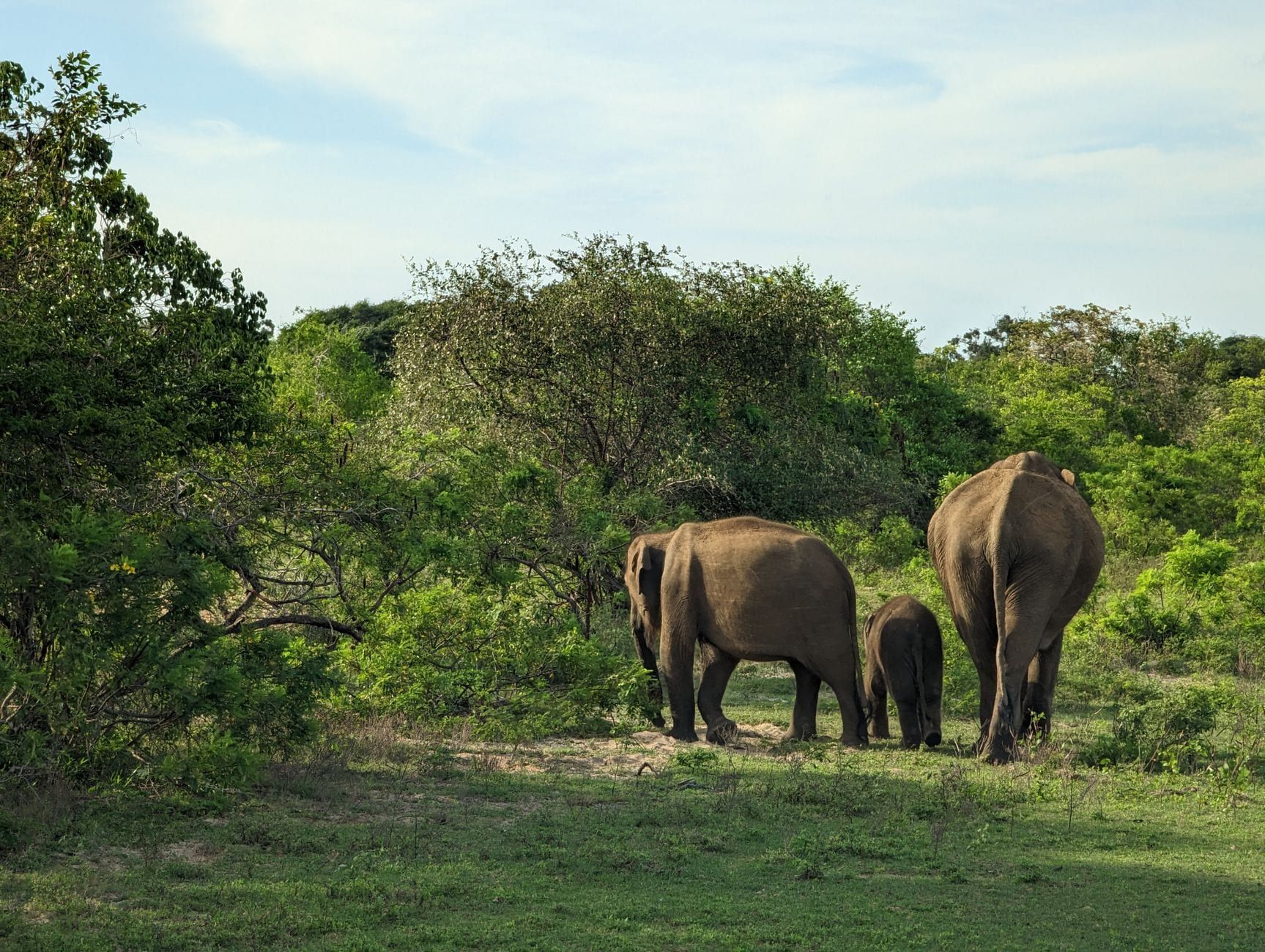
Sixty-eight chalets in the buffer zone between the ocean and a lagoon, with doubles from about USD $130–280 including breakfast and safaris extra. The reason to choose it: elephants regularly wander the open grounds at dusk, sometimes to the edge of the restaurant terrace — an unscripted wildlife moment you'd otherwise pay luxury rates for. Families and first-timers do well here. Book drives through the in-house desk, but request an experienced guide by name rather than accepting the default.
Hilton Yala Resort
The newest park-edge property, with 42 rooms overlooking the Indian Ocean, a spa and multiple restaurants; doubles list from around Rs41,960 (roughly USD $200+). Its packages can bundle meals, guided safaris and excursions, and in-house rangers come with refreshments and binoculars. This is the pick if you want international-brand predictability — consistent rooms, consistent service, an app that works. It's a resort with a safari attached rather than a safari lodge, and the price reflects that.
Jetwing Yala
A polished eco-resort with a saltwater infinity pool facing the ocean and an Ayurvedic spa, running on solar power, biomass energy and on-site water purification. It sits comfortably in the family-and-couple crossover: kids get the pool, adults get the spa, everyone gets a short drive to the gate. Rates fall in the middle of the mid-range band, and it's the strongest sustainability story of the bigger properties.
For a bush feel at mid-range money, look at the smaller camps — Back of Beyond or Makini Bush Camp — which trade resort facilities for a closer-to-the-wilderness atmosphere with far fewer rooms. And wherever you book this tier, remember the catch: the property's default jeep assignment is a lottery. Named guides with recent reviews are worth insisting on.
Budget Guesthouses and Camps in Tissamaharama (USD $25–80)
The value play almost every guide ignores: spend on the guide, not the bed. A clean, air-conditioned Tissa guesthouse double with breakfast runs USD $25–60 per night, and adding roughly $70 per person for a licensed independent safari guide routinely produces better wildlife results than a $200-plus lodge with an unvetted in-house jeep. The math is blunt — around $100 a day for a self-directed safari versus several times that at the gate-side lodges.
Tissa is the strategic base for travellers who want to direct their own experience: you choose the operator, the gate (Katagamuwa is an easy 45 minutes away if Palatupana's queues put you off) and the departure time. Two reliable picks: Moonlight Guest House, family-run and long-practised at arranging safaris for guests, and Art Yala Boutique Hotel, lake-side and known for packing safari meals for early starts.
When you're choosing a guesthouse for safari mornings, check four things:
- Air conditioning — you'll sleep four hours before a 4:30 am pickup
- Breakfast servable before 5 am, or packed to take
- Jeep pickup from the door
- Trusted connections to licensed guides
Buffer-zone budget camps at $30–60 per person are the other option, and they need more vetting. Ask whether the camp runs its own jeeps or outsources to whoever's free, whether drivers are licensed, and read recent reviews for mentions of guide quality — a camp's location means nothing if the jeep that collects you has a novice tracker. And always ask the question that catches people out: does the quoted safari price include the 15% service charge and the DWC entry permit? If the answer is vague, budget for both on top.
Permits, Jeeps and What Your Hotel Should Arrange
Every visitor needs a park entry permit from the Department of Wildlife Conservation — US$25 per foreign adult (USD $15 for children 6–12), plus a USD $10 group fee per vehicle, the LKR 300 vehicle ticket and 18% tax. Permits are buyable at the gate counters, which open at 6 am, or reserved online via the DWC's permit portal. Here's the catch that shapes your accommodation decision: the application requires your jeep and guide details. That's why booking your bed first and letting the hotel handle permits is the standard route — the lodge knows which vehicle and tracker it will assign you.
Timing rules around the permit are fixed. The park runs 6 am to 6 pm daily but closes between noon and 2 pm; the last morning-safari entry is 11 am and the last evening entry 5 pm, with all vehicles out by 6 pm sharp — staying after dark is a wildlife-law offence. A half-day drive covers about four hours, roughly 6–10 am or 2–6 pm.
Jeep and guide bookings are handled by private operators, not the DWC portal, and this is where the tiers genuinely differ. Buffer-zone lodges run their own jeeps with in-house rangers; Hilton-style resorts provide rangers with refreshments and binoculars; Tissa guesthouses connect you to licensed independents. A safari jeep carries a maximum of six guests plus driver and guide, so small groups can fill a vehicle cheaply. If you'd rather not negotiate any of this, pre-booked Yala safari tours bundle the jeep, tracker and permits into one price — compare them against the options on our full Yala tours page before committing.
However you book, vet the guide. The ranger-recommended approach: look for named, recent reviews that cite specific animals — "Nuwan found us two leopards on the rocks at Butawa" beats "great driver" every time. Then ask the money question: does this price include the taxes and the DWC permit? A surprising number of cheap quotes don't, and the difference at the gate is real money.
When to Book: Seasonality, Prices and Availability
Yala's calendar is a dry season of plenty and a monsoon of closures, and both move prices hard. February to July is the prime window: water levels drop, animals gather at shrinking lagoons and waterholes, and April to July offers the best leopard odds thanks to low water and short grass. Demand and rates peak with it. For the fuller picture, see our best time to visit Yala guide.
The monsoon runs September to December and can close parts of the park through flooding. Separately, Block 1 — the main leopard area — typically closes for a few weeks around September–October for annual maintenance, though the decision is made year by year depending on drought. If you're committed to those months, verify the park's status before paying a deposit.
Booking windows by tier: luxury lodges 3–6 months ahead for the February–June peak, and up to 9 months for the December–January festive season; mid-range properties 4–8 weeks; DWC bungalows 3–4 months; Tissa guesthouses 1–2 weeks outside peak. In peak season everything tightens — book the bed before you book the flights.
The price swing between months is enormous. Averaged across Yala hotels, nightly rates run around $29 in May versus around $477 in December — a fifteenfold difference. The value play is the shoulder: April–May and August combine lower rates with good viewing, and May or June specifically buy you December-grade wildlife with a fraction of the jeep traffic. If your dates are flexible, move them. If a September closure looks likely, keep Udawalawe, an hour and fifty minutes away, as the elephant-heavy backup.
Frequently asked questions
Should I stay inside Yala National Park or in Tissamaharama?
Tourist lodges don't operate inside the park — park-edge and buffer-zone properties put you at the gate in 5–15 minutes with wildlife on the grounds. Tissamaharama is 20–30 minutes from Palatupana but three to five times cheaper, and it unlocks independent licensed guides. Both work; it's a budget-and-priority call.
How much does accommodation near Yala National Park cost?
Roughly $25–60 for a clean air-conditioned Tissa guesthouse double, $80–300 for mid-range hotels and camps, and $300–1,200+ for all-inclusive luxury lodges (Chena Huts runs £900–1,500). Rates swing hard by season — average nightly rates around Yala are about $29 in May versus $477 in December.
Can you actually stay inside Yala National Park?
Yes, but only in basic government bungalows run by the Department of Wildlife Conservation — Heenwewa and Mahaseelawa among them — booked directly through the DWC, months ahead. Note that overnight permits double the entry ticket price. Everything else sits outside the boundary or in the buffer zone.
Is it worth paying extra for an all-inclusive safari lodge?
For first-timers, yes — drives, meals and park fees are bundled and the logistics vanish. But a $30 Tissa guesthouse plus an independently booked licensed guide (about $70 per person) often matches the wildlife results for a fraction of the price. Either way, vet the specific guide.
Which hotels have the best leopard sightings?
None can guarantee them — sightings come down to season, luck and guide skill. Block 1 holds roughly one leopard per square kilometre, the densest population in the world, and most lodges sit near its gates. Katagamuwa- and Galge-side camps trade convenience for fewer vehicles and quieter blocks.
How far in advance should I book Yala accommodation?
Luxury lodges 3–6 months ahead for the February–June peak and up to 9 months for December–January; mid-range 4–8 weeks; Tissa guesthouses 1–2 weeks off-peak; DWC bungalows 3–4 months. Remember Block 1 usually closes for a few weeks around September–October for maintenance.
Do Yala hotels arrange the safari and permits for you?
Park-edge lodges usually bundle game drives and file the DWC permit — US$25 per foreign adult via the official portal, and the permit requires your jeep and guide details, which is why hotels handle it. Independent travellers in Tissa book jeeps and permits separately. Always ask whether taxes and the permit are included in a quoted price.
What's the best place to stay near Yala for families?
Mid-range properties with pools and space: Cinnamon Wild Yala (68 chalets, elephants often wander the grounds at dusk), Hilton Yala Resort (international standards and family packages) and Jetwing Yala. In Tissa, family-friendly guesthouse bases keep the budget down for bigger groups.