Yala and Udawalawe sit about 65 km apart in Sri Lanka's dry southeast, yet they hand you two completely different safaris. Yala offers the best leopard odds on earth and some of the worst jeep traffic in Asian wildlife tourism. Udawalawe offers elephants — reliably, calmly, and usually without another vehicle in sight. Here's how the two parks actually compare on wildlife, crowds, costs, seasons and logistics, so you can pick the one that fits your trip.
Udawalawe vs Yala National Park: The Quick Answer
Pick Yala if a leopard is the whole point of the trip. Block 1 carries an estimated 25–30 of them — up to one per square kilometre, the highest density found anywhere — and the park's mix of scrub jungle, brackish lagoons and wild Indian Ocean coastline makes it the more varied day out. The price of those odds is crowds and cost: up to 600 vehicles enter on peak days, tours run dearer, and the park typically shuts for about six weeks each autumn. Pick Udawalawe if elephants are the goal. Its 500–700 residents, often moving in herds of up to 100, make sightings close to certain in any month, and the drives are cheaper, quieter and open every day of the year.
| Yala (Block 1) | Udawalawe | |
|---|---|---|
| Best for | Leopards, sloth bears, varied scenery | Elephants, birds, quiet game drives |
| Crowds | Heavy — 600-vehicle daily cap, radio-triggered jeep jams | Light — often one or two other jeeps all drive |
| Cost | Half-day tours from ~LKR 15,000–20,000 pp | Tours from ~LKR 7,000–15,000 pp |
| Access | Tissamaharama or Kirinda; ~2.5 h from Ella | Udawalawe town or Embilipitiya; 1.5–2 h from Ella |
| Best season | February–September; peak leopard odds April–July | May–September best, good all year |
| Closed when | ~September 1 to mid-October most years | Open year-round |
And if you have four or five spare days? Do both. The parks sit 65 km apart, they cover each other's weaknesses — leopards and bears at Yala, elephant herds and silence at Udawalawe — and they sequence neatly between the hill country and the south-coast beaches.
Park Snapshots: Size, Zones and Safari Style
Yala is big — 979 km² across five blocks, Sri Lanka's second-largest park and its very first, declared on 1 March 1938. Only Blocks 1 and 5 are open to tourists; the rest are reserved for research. Almost all the action concentrates on Block 1, the crowded leopard core entered at Palatupana or Katagamuwa, while Block 5 — reached through the Galge gate — sees a fraction of the traffic. The park drew 646,704 visitors in 2024, after a record 214,572 foreign visitors in 2023. It is, by a wide margin, Sri Lanka's most-visited park.
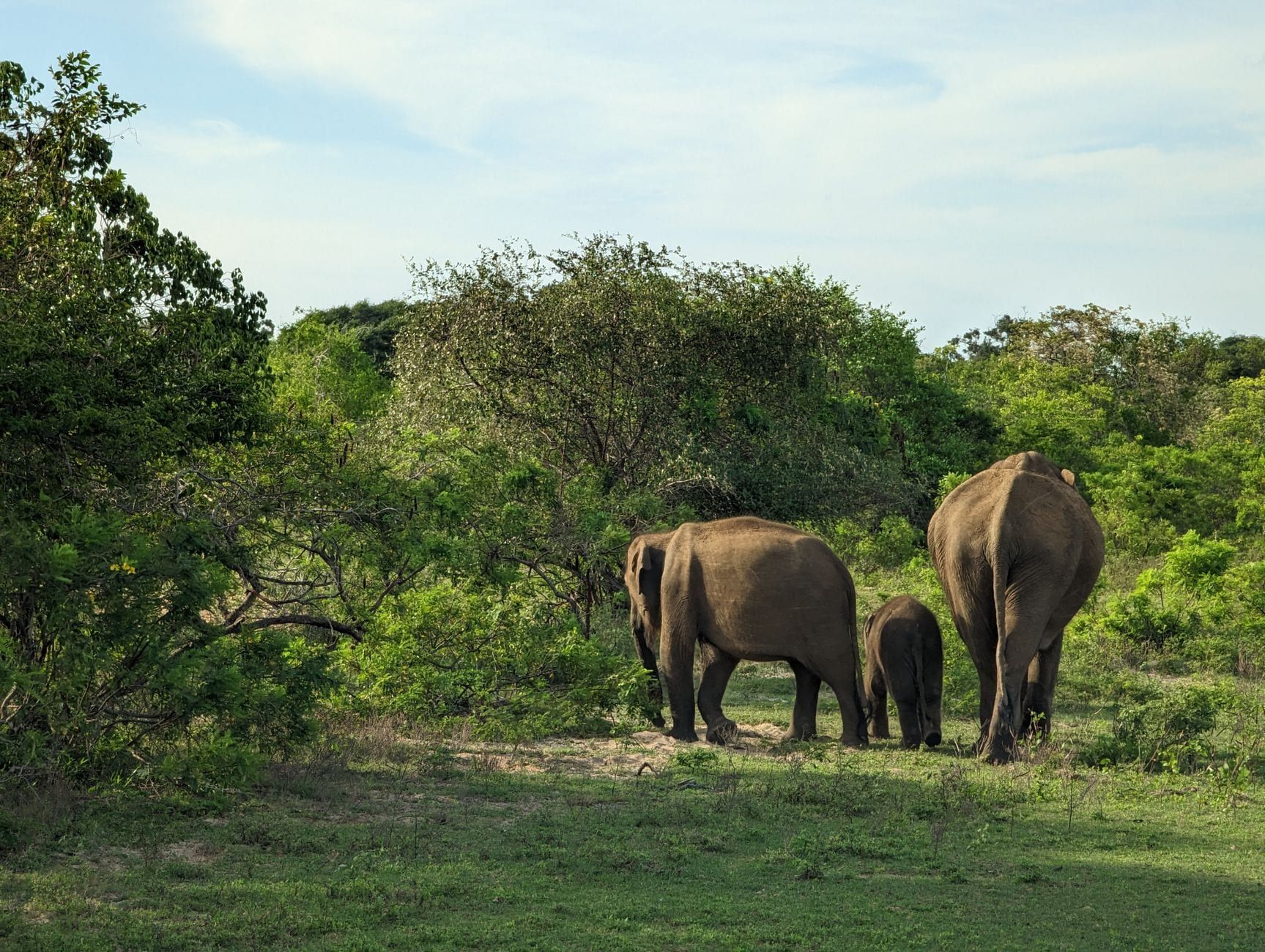
Udawalawe is a third of the size, 308 km², and much younger: it was gazetted on 30 June 1972 to shelter wildlife displaced by the newly built Udawalawe Reservoir, which still anchors the park. That reservoir is the design difference. It keeps the surrounding land open — grassland and low scrub rather than dense forest — so animals stand in plain view for hundreds of metres instead of disappearing into bush. In 2023 the park counted 188,388 visitors, roughly a third of Yala's traffic spread across similarly open terrain.
Terrain shapes the drive. At Yala you work for sightings: trackers read pug marks and alarm calls through thick scrub, and the reward is a park that changes face every few kilometres — lagoons, granite outcrops, a wild coastline. At Udawalawe you scan: the savannah-like flats mean you'll likely find the herds yourself within the first hour. Neither style is better; they just suit different attention spans.
Wildlife Head-to-Head: Leopards, Elephants, Bears and Birds
Both parks protect the same broad cast — water buffalo, mugger crocodiles, spotted deer, jackals, mongooses, toque macaques, gray langurs and peafowl. The gap opens on the specialist species, and that gap is what should decide your booking. Our fuller guide to Yala's animals covers the park's 44 mammal and 215 bird species in detail.
Leopards
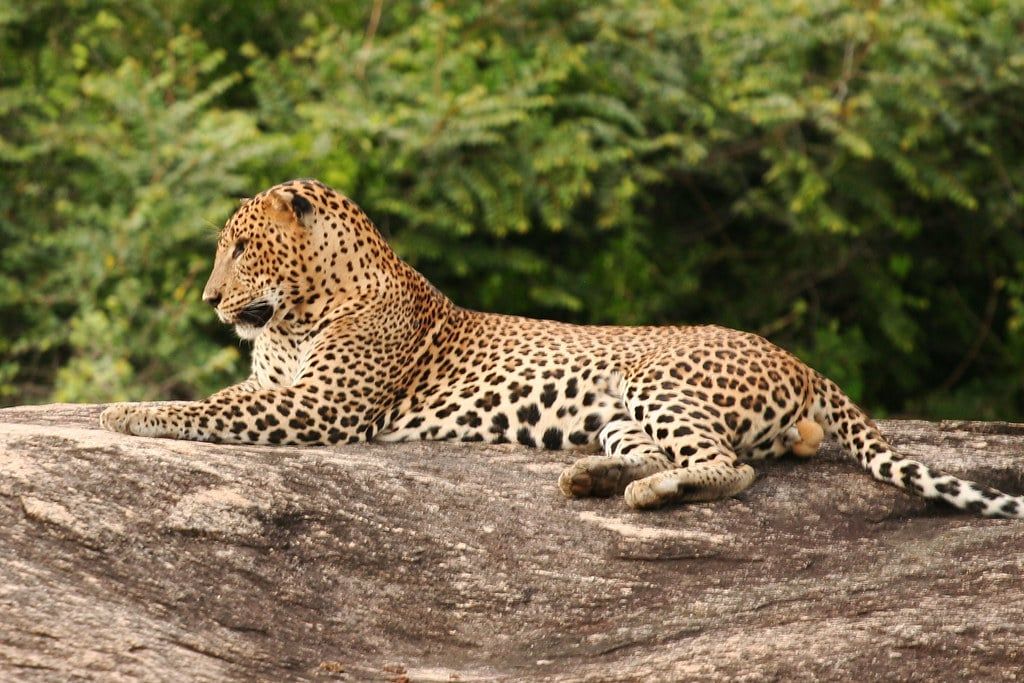
This is Yala's fight to lose. Block 1 holds an estimated 25–30 leopards at up to one per square kilometre — the densest population recorded anywhere on earth — and the cats here have grown used to vehicles, so they lounge on granite boulders instead of vanishing. Most Yala safaris end with at least one leopard; dawn drives in the April-to-July window are the strongest bet. Udawalawe keeps roughly 10–12 leopards across the whole park, and the open terrain they must cross makes them genuinely shy. A sighting there is real luck. Treat it as a bonus, never a plan.
Elephants
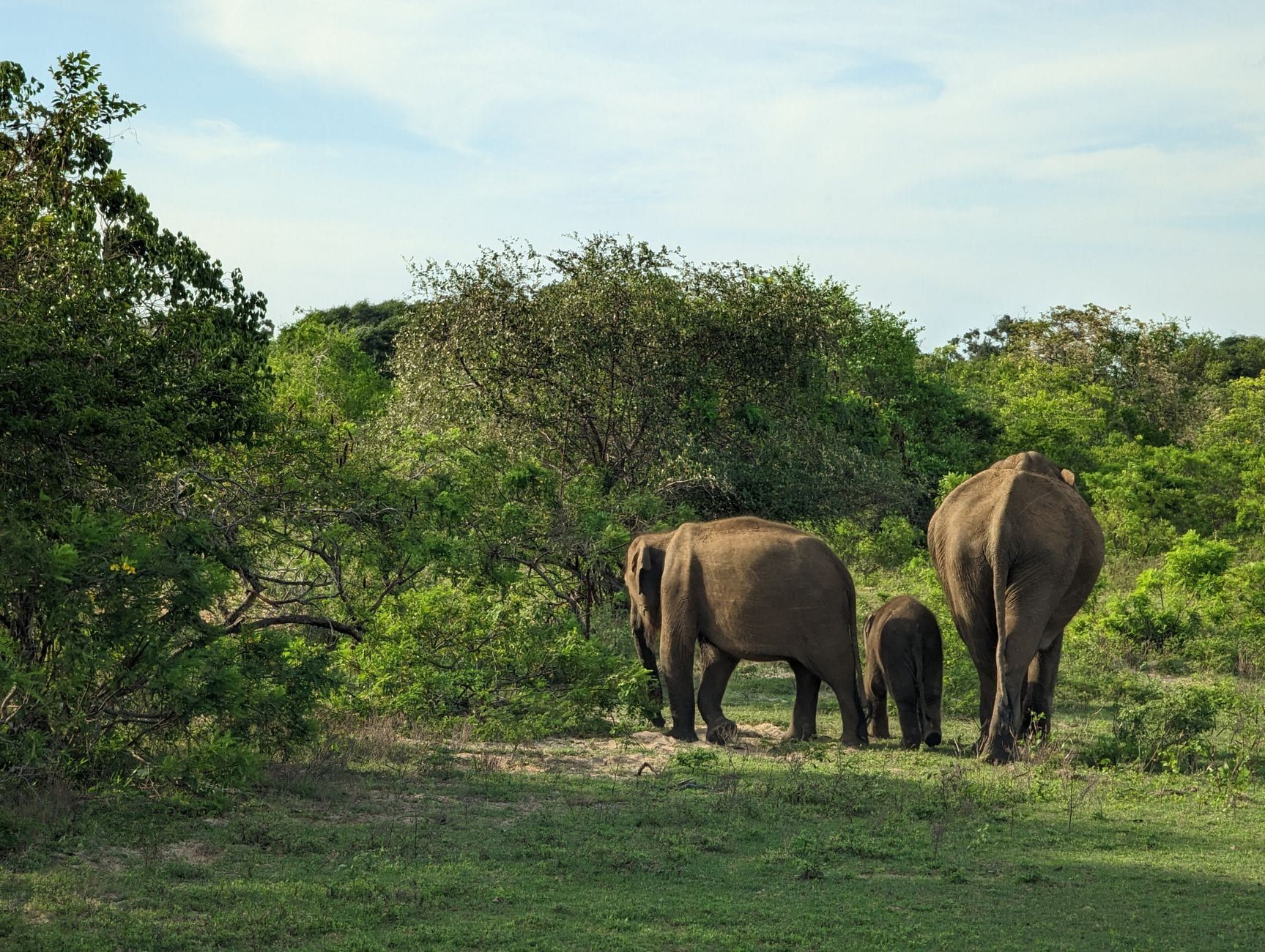
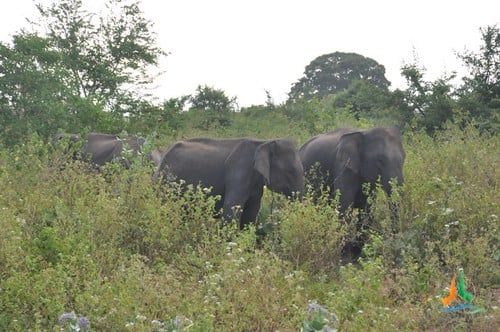
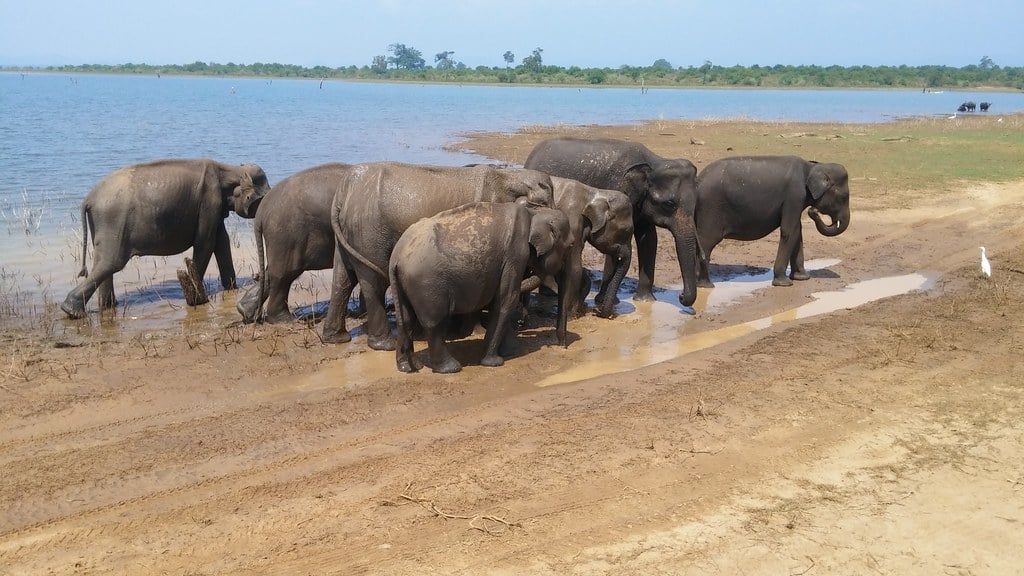
Flip the comparison and Udawalawe wins just as hard. Around 500–700 elephants live in and around the reservoir, and they gather in herds of up to 100 at the water's edge — a sight that routinely stops first-time visitors mid-sentence. Sightings are effectively guaranteed, morning or afternoon, any month. Yala's elephants are usually seen alone or in small family groups at waterholes, and a Yala safari without a single elephant is possible, if unusual. If a close, lengthy encounter with a herd matters more than a distant leopard, the choice is made.
Sloth bears
Yala is one of the best places anywhere to look for the Sri Lankan sloth bear, with roughly 500 left in the wild. Realistic is the operative word — sightings are never likely, but your odds here beat any other park on the island, and May to July is the prime window, when bears feed in fruiting trees at dawn and dusk. Udawalawe's bears exist but are rarely seen. This alone justifies Yala for returning safari-goers who already have their elephant fix.
Birds
Both parks reward birders, in different registers. Yala's 215 recorded species include painted storks, hornbills, bee-eaters and flamingos among the wetland birds. Udawalawe counters with 184 species, 33 of them migratory, plus 135 butterfly species across open terrain that makes spotting easy. From November to April, migrants arrive from Central Asia and the Himalaya at both parks — a winter trip with binoculars does well either way. Serious listers will get more species at Yala; casual watchers will get better views at Udawalawe.
Crowds, Jeeps and the Safari Experience
Crowds are the most decisive practical difference between these parks, and no brochure mentions them. At Yala's Palatupana gate, jeeps queue from 5:30 am for the 6 am opening, and the 600-vehicle daily cap is routinely reached in the December-to-April peak — wildlife biologists have argued the sustainable number is closer to 40–50. Inside, drivers run a radio network: the moment someone finds a leopard or a sloth bear, ten to twenty jeeps converge on the same spot, engines jostling, and a sighting can turn into an hour-long parking exercise. Speeding jeeps have killed and injured animals on these tracks, which is the serious side of the congestion.
Udawalawe runs on different physics. The park is large relative to its visitor numbers and the terrain is open, so jeeps disperse instead of clustering — you'll often see one or two other vehicles in a whole three-hour drive, sometimes none. That changes what a safari feels like: you can sit with a herd for twenty minutes without another engine arriving, and the animals behave accordingly.
Timing helps at both. Yala's morning safaris run roughly 6–9 am and afternoon drives 3–6 pm, with jeeps barred from the park entirely between 12:00 and 2:00 pm — even full-day tours must sit out the midday at designated rest areas. Mornings bring the most animal activity and the worst queues; afternoons are quieter at the gate but thinner on cats. At Udawalawe the late-afternoon slot, about 3–6 pm, is the one to take, as herds drift toward the reservoir to drink and bathe.
One more Yala tactic worth knowing: Katagamuwa gate reaches the same leopard-rich Block 1 as Palatupana but handles roughly 20–30 vehicles a day against 200-plus at the main gate. Same cats, a fraction of the queue. Our Yala safari tours can be booked with either gate — specify when you reserve.
What a Safari Costs in Each Park
Government entry fees are identical at both parks, so the cost gap comes entirely from the tour market. A day permit from the Department of Wildlife Conservation costs $25 per foreign adult and $15 per child aged 6–12, with under-6s free. On top comes a $10 group fee per vehicle, a LKR 300 vehicle ticket and 18% tax on the total — two adults and one child land at $88.50 in permits before the jeep is even hired, and a full group usually works out to roughly $31–36 per person all-in. We keep the current entry fees and opening hours on a separate page, and the DWC permit portal publishes official prices.
| Cost item | Yala | Udawalawe |
|---|---|---|
| Typical half-day tour, per person | LKR 15,000–20,000 | LKR 7,000–15,000 |
| Typical full-day tour, per person | LKR 25,000–30,000 | Rarely needed |
| Official jeep hire, half-day (Block 1) | LKR 16,900 | Cheaper market overall |
| Best value for budget travellers | Shared half-day, afternoon slot | Shared 3-hour drive |
| Best value for photographers | Private morning, Katagamuwa gate | Private late-afternoon drive |
Read that table again and the punchline lands: a private jeep at Udawalawe can cost less than a shared seat at Yala. Part of the gap is market pressure — Yala's demand lets operators charge more — and part is duration, since Udawalawe safaris are typically three-hour drives rather than Yala's four-to-twelve-hour formats.
On booking: reserve Yala well ahead in the December-to-April peak, when jeeps and morning slots sell out — through your guesthouse, an operator, or a platform like GetYourGuide, but confirm exactly what's included. A good price should cover the vehicle, a registered tracker, permits handled or clearly itemised, binoculars, water and a canopy for the sun. Udawalawe is looser; most guesthouses around the park can arrange a next-day jeep without much notice.
Best Time to Visit Each Park (and Yala's Annual Closure)
Your travel dates may make the decision for you. Yala's best viewing runs February to September: the dry season shrinks the waterholes, animals crowd what's left, and the April-to-July stretch of low water and short grass is the peak leopard window. May and June are the sweet spot — excellent viewing with far fewer jeeps than the December-to-April rush.
Then comes the catch. Yala traditionally closes for about six weeks, roughly September 1 to mid-October, for drought maintenance and the leopard breeding season. The closure is decided year by year — the park stayed open in 2023 — but any trip in that window needs a backup plan, and Block 5 has sometimes remained open through the shutdown. Udawalawe carries no such risk: it opens every day, and sightings hold up in any month. Check the current status before you book anything for September, and read our month-by-month guide to the best time to visit Yala before locking dates.
Two calendar bonuses worth planning around. From November to April, migratory birds arrive at both parks from Central Asia and the Himalaya. And Udawalawe runs on an elephant cycle — mating season around September and October, calving peaking October to January — so a winter visit can put you beside mothers with small calves at the reservoir.
Getting There, Itinerary Fit and Where to Stay
The parks are 65 km apart, but they sit very differently on a Sri Lankan itinerary. Udawalawe sits directly between the hill country and the south coast — about 1.5–2 hours from Ella, roughly 1.5 hours from Tangalle, and around 4 hours from Colombo — which makes it an easy one-night stop on the classic Ella-to-beaches route. Yala hangs off the island's southeast corner and usually demands dedicated travel days: expect about 2.5 hours from Ella, 3–4 hours from the Mirissa beaches, and 4.5–5 hours from Colombo by private car. Full transport options and routes to Yala — buses, trains, flights — are covered separately.
Base towns follow the gates. For Yala, stay in Tissamaharama (the main hub, with most operators and guesthouses) or quieter Kirinda; for Udawalawe, the small town of Udawalawe itself or Embilipitiya. Our Yala accommodation guide covers the budget-to-luxury spread around Tissa, from guesthouses to safari camps. At Udawalawe, a string of lodges sits on the park road, and several have verandas overlooking land the elephants actually use — you can watch a herd cross at dusk without paying for a drive.
One Udawalawe extra worth an hour: the Elephant Transit Home near the main gate, which rehabilitates orphaned elephants and releases them back into the wild. Feeding sessions are visible from a viewing platform, and it slots neatly between arrival day and an afternoon drive. Travellers starting from the hill country can also build the whole thing into a single booking — tours from Ella run to both parks. Two nights near each park is the comfortable minimum; one rushed night means gambling your entire safari on a single drive.
The Verdict: Which Park Should You Choose?
Everything above folds into three straightforward calls.
Choose Yala if leopards are the mission
Book Yala when the trip needs a big cat in it, or a sloth bear, and you'll trade patience, queues and money for the attempt. Two tactics soften the cost of Yala's fame. Use the Katagamuwa gate or ask for Block 5 via Galge — Block 5 sees far fewer jeeps than Block 1 and has sometimes stayed open even during the September-to-October closure — and travel in May or June rather than the December-to-April crush. You keep most of the leopard odds and shed most of the chaos.
Choose Udawalawe if elephants, quiet or budget decide
Book Udawalawe when you want certainty. Families with kids get near-guaranteed close-up elephants, short drives, no dawn queue and the Elephant Transit Home next door. Birders get easy open-terrain viewing and the November-to-April migrants. Budget travellers pay less for a private jeep than a shared Yala seat. And anyone travelling in September or early October — when Yala may be shut — gets a park that never closes.
Do both if you have the days
With four to five days, stop choosing. Run the route Ella → Udawalawe → coast → Yala, or its reverse, with two nights at each park; 65 km and about two hours' driving separate them. Yala gives you the leopard and the scenery, Udawalawe gives you the herd and the silence, and the two together cost less than one rushed attempt at either plus a wasted travel day. If you can only take one, and leopards top the list, go to Yala in May or June. If elephants, families or budget lead, Udawalawe wins — and it never lets you down for a closure.
FAQs
Can you see leopards in Udawalawe National Park?
Rarely, and only by luck. Udawalawe holds roughly 10–12 leopards across the whole park, versus an estimated 25–30 in Yala's Block 1 alone, and the open terrain keeps them wary. Treat a Udawalawe leopard as an unexpected bonus rather than a plan.
Is it worth visiting both Yala and Udawalawe?
Yes — the parks are about 65 km apart and complementary: Yala for leopards, bears and scenery, Udawalawe for elephant herds and quiet. Two nights near each park is the comfortable minimum, sequenced along the Ella-to-south-coast route.
Is a morning or afternoon safari better?
Mornings (roughly 6–9 am) bring peak animal activity but Yala's worst gate queues; afternoons (about 3–6 pm) are calmer. Udawalawe's late-afternoon drive is the standout — herds drift to the reservoir to drink. Yala bars all jeeps from the park between 12:00 and 2:00 pm.
How much does a safari cost per person in each park?
The official DWC permit is $25 per foreign adult and $15 per child aged 6–12, under-6s free, plus a $10 vehicle group fee, LKR 300 vehicle ticket and 18% tax — roughly $31–36 all-in per person depending on jeep occupancy. Tours add LKR 7,000–15,000 per person at Udawalawe and LKR 15,000–20,000 half-day (LKR 25,000–30,000 full-day) at Yala.
When is Yala National Park closed?
Traditionally for about six weeks, roughly September 1 to mid-October, for drought maintenance and the leopard breeding season — though the decision is made year by year, and the park stayed open in 2023. Block 5 has sometimes remained open during the closure. Udawalawe never closes.
Which park is better for families with kids?
Udawalawe, in most cases. Elephant sightings are close to certain, drives are shorter, queues are minimal and under-6s enter free, with the Elephant Transit Home beside the gate as an extra. Yala suits older children set on seeing a leopard who can handle an early start and waits in jeep lines.
Do I need to book my safari in advance?
Yes for Yala in the December-to-April peak, when jeeps and morning slots sell out — book a week or more ahead through your guesthouse, an operator or a platform, and check what's included. Udawalawe is more flexible and can usually be arranged a day ahead.