Yala National Park holds the densest leopard population on Earth, and that single fact shapes every drive through its 979 square kilometres of scrub jungle, grassland and lagoon on Sri Lanka's south-east coast. It is the island's oldest and most visited park, divided into five blocks, with almost all safaris concentrated in wildlife-rich Block I. Most visitors come for the cats and leave surprised by everything else: 44 mammal species, 215 bird species, crocodile-filled lagoons and a wild coastline where sea turtles nest. Here is what actually lives in Yala — and what you realistically will and won't see.
Yala National Park Animals at a Glance
Sri Lanka's safari shorthand is the Big Three: leopard, sloth bear and Asian elephant, the island's answer to Africa's Big Five. Local operators stretch it to a Big Five by adding the wild water buffalo and the crocodile. Both labels undersell the park. Yala's species list runs to 44 mammals and 215 birds, plus a reptile cast and a marine fringe most visitors never factor in. Four of the headline animals — the leopard, sloth bear, elephant and wild water buffalo — are threatened species, which is a fair part of why the park exists at all.
Set your expectations in three tiers. Near-guaranteed on any half-day drive: spotted deer, wild boar, water buffalo, toque macaques and grey langurs, mugger crocodiles, peacocks, and elephants. Likely, with decent guiding and two or more drives: the Sri Lankan leopard. Lucky, and genuinely memorable when it happens: the sloth bear, fishing cat, golden palm civet, and birds like the black-necked stork. If a tour operator promises all three Big Three on one drive, book elsewhere — nobody can promise a bear.
The leopard numbers explain Yala's reputation. Block I alone is estimated to hold around 25 leopards, and researchers put the block's density at one cat per square kilometre or better — the highest concentration recorded anywhere. No tigers and no lions share the island, so the leopard sits alone at the top of the food chain, and that changes how it behaves. If you want the park's full backstory and practical basics, our guide to Yala National Park covers the history and visitor setup.
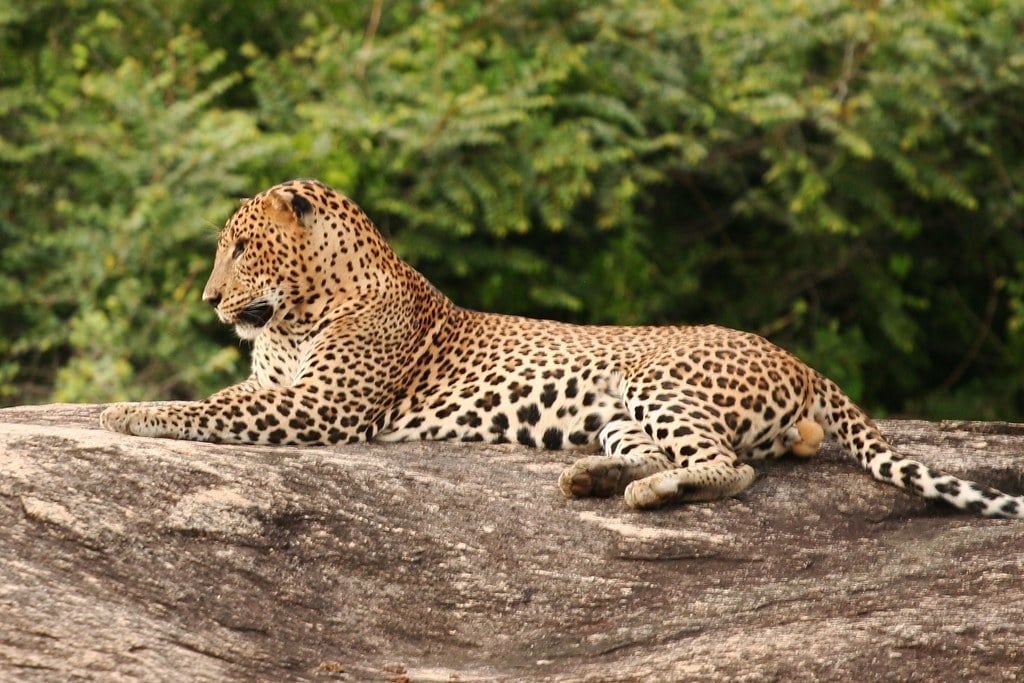
Sri Lankan Leopard: The Best Odds of Seeing a Wild Leopard Anywhere in Asia
One subspecies, endemic to the island, and the reason most people book a Yala safari in the first place. Everything about the Sri Lankan leopard — its size, its daylight habits, its indifference to jeeps — flows from one biological fact: it has the island to itself.
Why Yala's leopards are so easy to see
The Sri Lankan leopard (Panthera pardus kotiya) is a distinct, island-endemic subspecies, listed as Vulnerable by the IUCN. It is the park's only big cat and its main predator. Without tigers or lions to compete with or hide from, Yala's leopards grow larger than their mainland cousins and behave with a confidence you rarely see elsewhere in Asia. They sprawl on granite boulders to warm up in the early light, walk the tracks in daylight, and generally treat safari jeeps as a boring part of the scenery. In India or Malaysia a leopard sighting is a fluke; in Yala it is the stated purpose of the drive.
How to actually maximise your chance
Leopards are crepuscular — dawn and dusk are their moving hours, so the 6 am gate opening is the window that matters. Your tracker does the rest: guides radio each other across Block I, and a confirmed sighting typically pulls every jeep within range. Let that work for you rather than against you by choosing a safari with an experienced tracker; spotting skill and radio networks drive far more sightings than luck. One local tip worth planning around: leopards are most active in the late afternoon around the new moon, when the park is also quieter.
Honest odds, then: Yala is arguably the best place on the planet to see a wild leopard, and most visitors who do two or three drives get at least one cat. Some drives still produce nothing. The park's density is extraordinary, but the animal is a predator that sleeps much of the day in thick scrub — a blank morning is normal, not a rip-off. Book multiple drives and treat any sighting as the bonus it is.
Sri Lankan Elephant: The Sighting You Can Count On
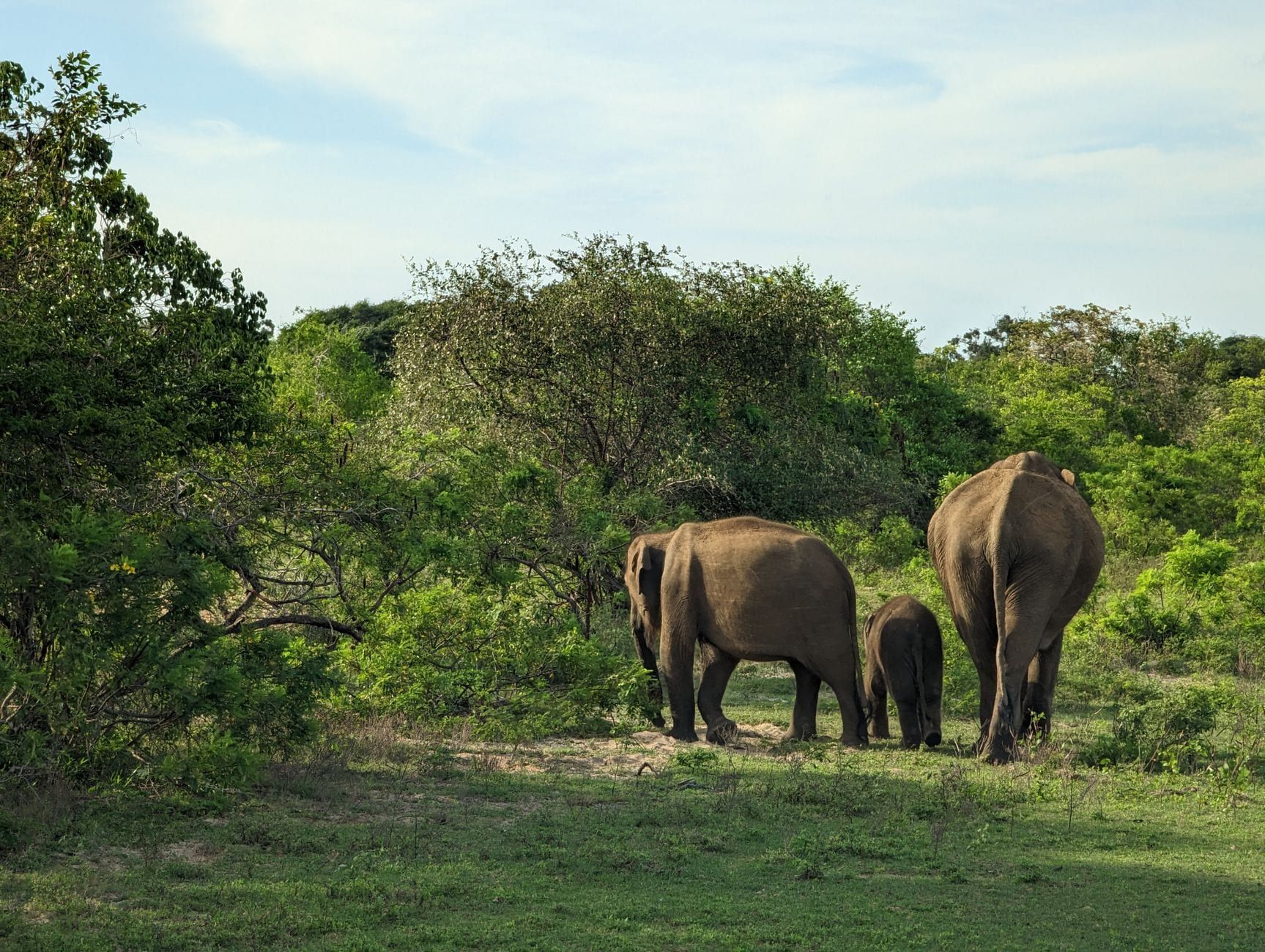
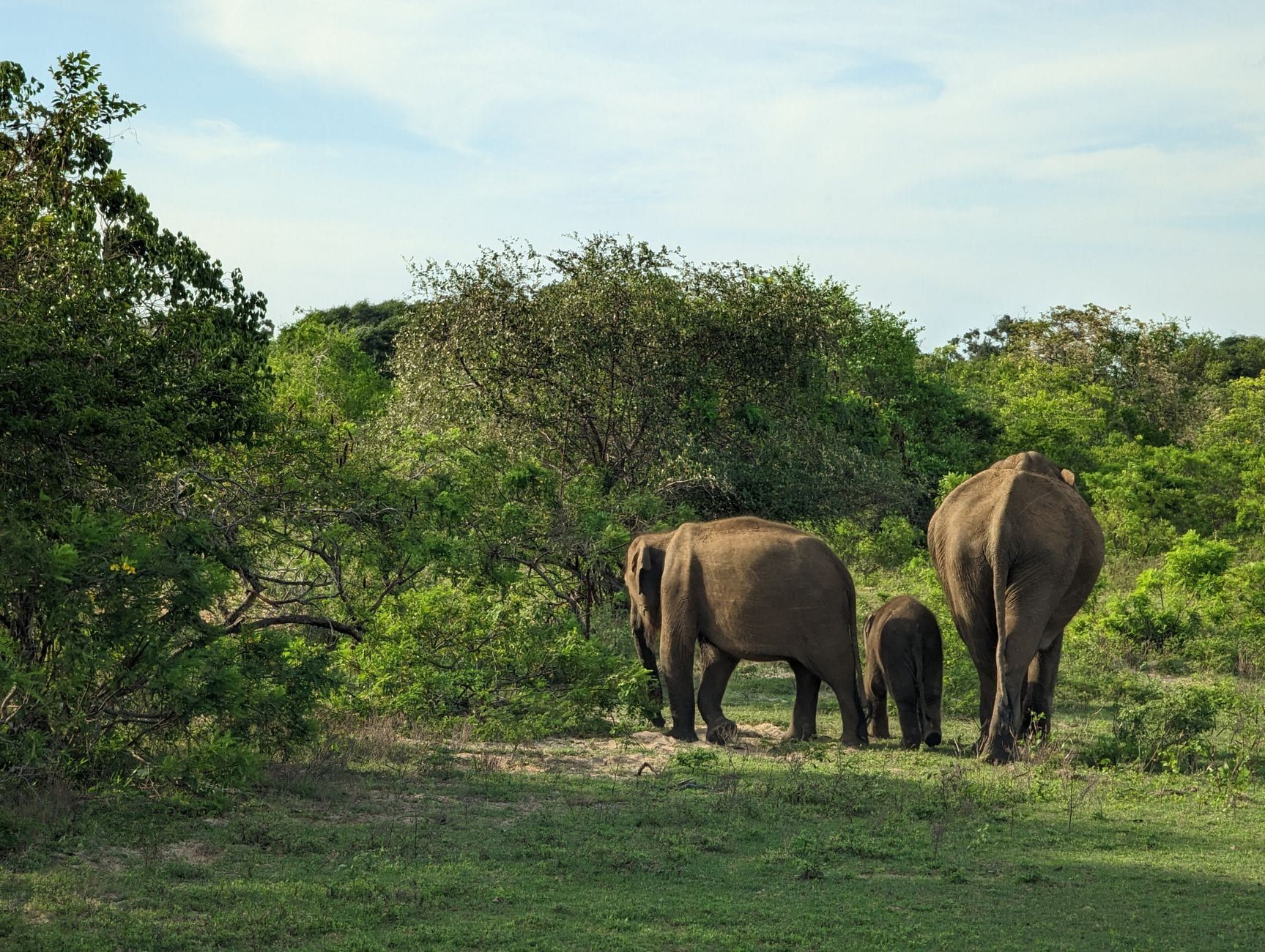
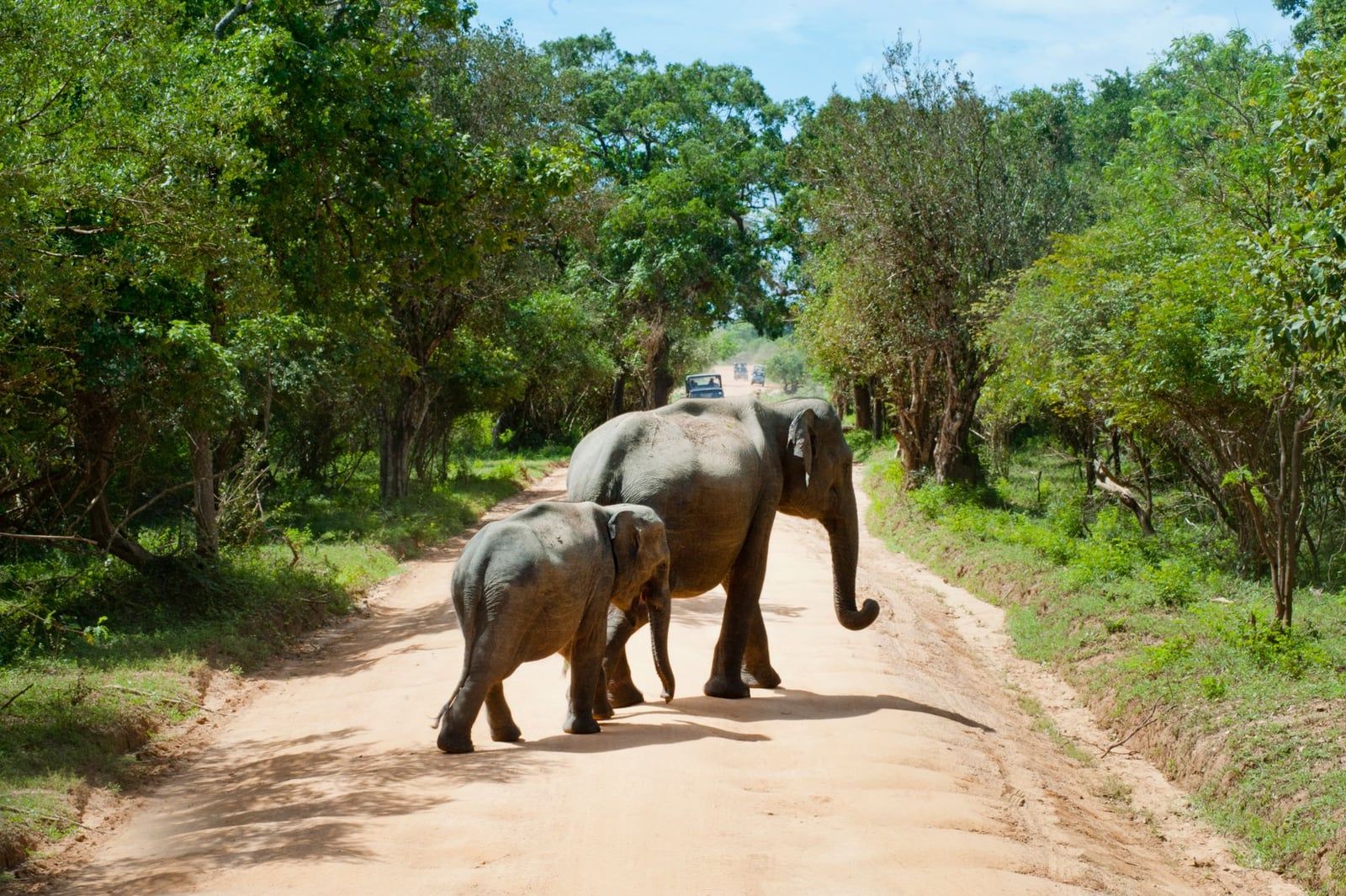
Elephants are effectively a given in Yala. Population estimates run from 250 to 350 animals depending on season, and most drives cross paths with at least one herd or a lone bull. Expect small family groups of six to ten, led by the eldest female, with adult males living separately outside the herd. Tuskers are rare — fewer than 8 percent of Sri Lankan bulls carry tusks, a contrast with Africa that surprises first-time visitors. Asian elephants also have smaller ears and a rounder back than their African cousins.
You'll find them grazing the open grasslands or drinking and bathing at the lagoons and waterholes, and they're at their most visible in the dry months from February to July, when water is scarce and everyone crowds the remaining sources. An afternoon drive that lingers near a waterhole, engine off, is the best elephant setup in the park — you'll hear grunts and huffing long before you need binoculars. The Asian elephant is classified as Endangered, so every herd you see in Yala is a protected one.
Sloth Bear: The Hardest of Yala's Big Three to Spot
The sloth bear is Sri Lanka's only bear — a shaggy, black-coated insect specialist with a hairless snout built for hoovering up termites, and a pale V-shaped mark on its chest. It is shy, solitary and largely nocturnal, which is why a park with healthy bear numbers produces so few bear sightings. The IUCN lists it as Vulnerable. Most visitors never see one, and that's the baseline to plan on.
The odds have a season, though. Between May and July the palu trees fruit, and bears come out in daylight to feed on the fallen fruit — June and July are the peak months, when sightings spike along the fruiting groves. Book the earliest possible morning drive during that window; an early start roughly doubles your chances because bears feed at first light before retreating from the heat. Even in palu season, treat a sloth bear as a lucky bonus. Don't build a whole trip around it.
The Other Mammals: Deer, Buffalo, Jackals, Monkeys and the Rare Night Shift
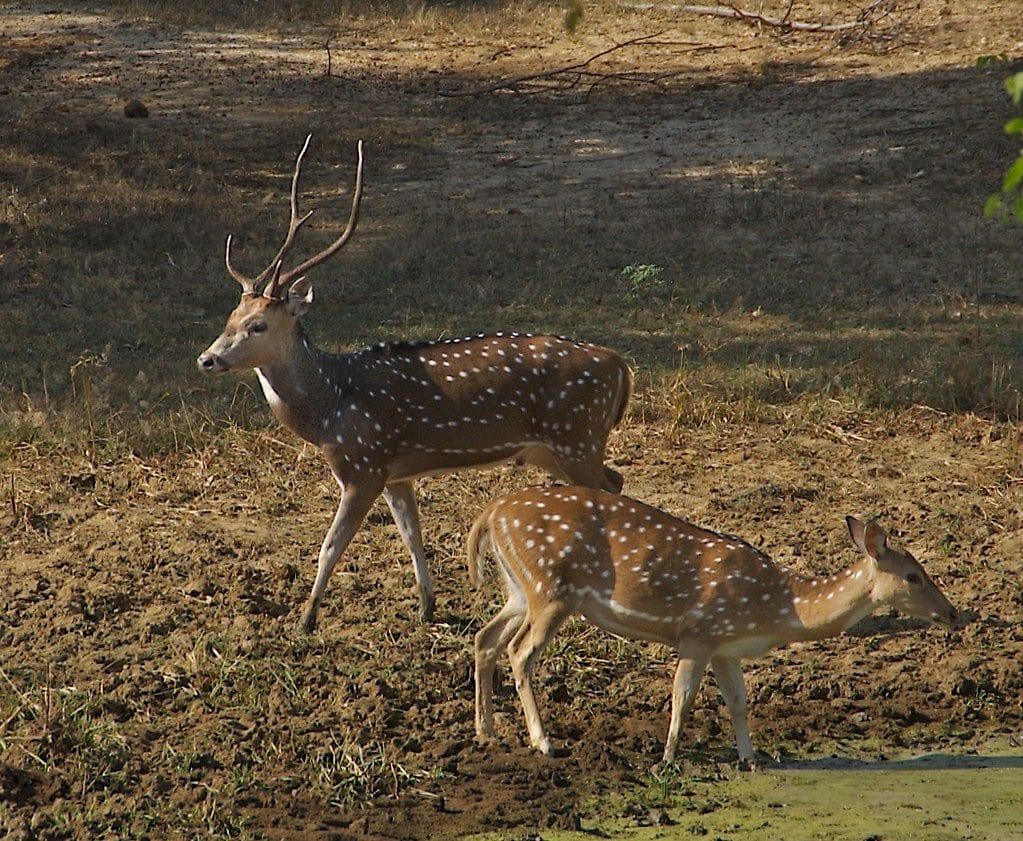
Spotted deer are Yala's most common mammal and your best leopard-finding tool. They give a loud, sharp alarm call when a cat is near, and good trackers follow the sound rather than the roads — when the deer start barking, look where they're looking. Sambar, the larger and darker forest deer, and burly wild boar share the same role as leopard prey and appear on most drives too.
Wild water buffalo wallow in the wetlands in loose herds, mud-caked and unimpressed by jeeps. One caveat for the purists: although buffalo are indigenous to Sri Lanka, most herds today carry genes of domestic stock or descend from feral animals, so Yala's buffalo sit somewhere between wild and feral. They still count on the Big Five list. Keep an eye out regardless — they're near-guaranteed sightings and often share the lagoons with crocodiles and painted storks.
The small-carnivore cast shows up in daylight more than you'd expect. Golden jackals trot the track edges in pairs, often at dawn; ruddy and grey mongooses hunt snakes and beetles in the open with a swagger that makes them easy to watch. Primates are everywhere: toque macaques with their odd bowl-shaped hair, and tufted grey langurs lounging in the treetops. Both monkey species also give alarm calls when a leopard moves, so a tracker who watches langurs is working, not idling.
Then there's the night shift, which a daytime safari almost never meets: the fishing cat prowling the lagoon edges, the golden palm civet, the tiny red slender loris, and the rusty-spotted cat, the world's smallest wild cat. These are Yala's genuine rarities. If you see one before lunch, buy a lottery ticket on the way home.
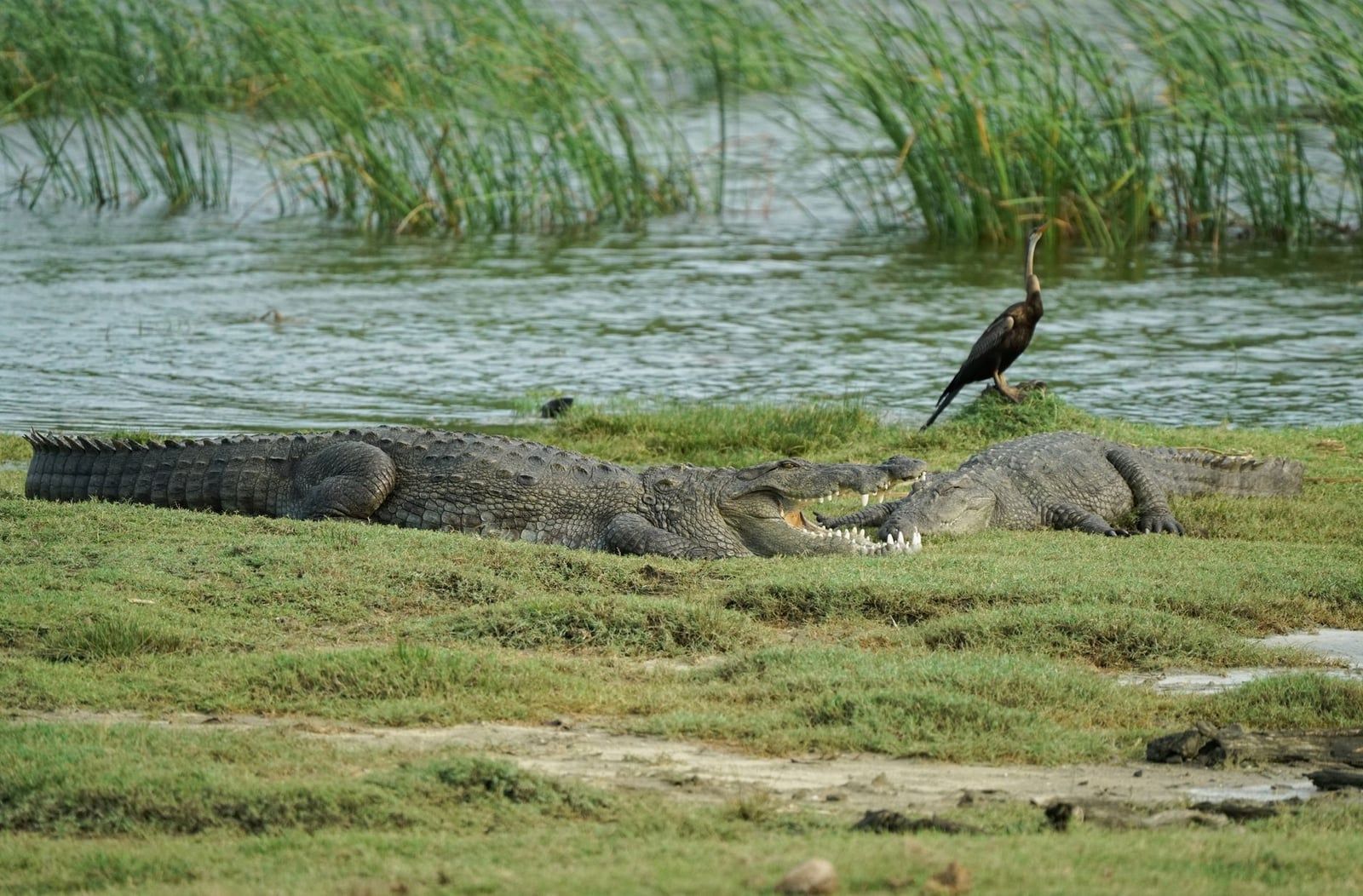
Crocodiles, Monitor Lizards and Coastal Wildlife
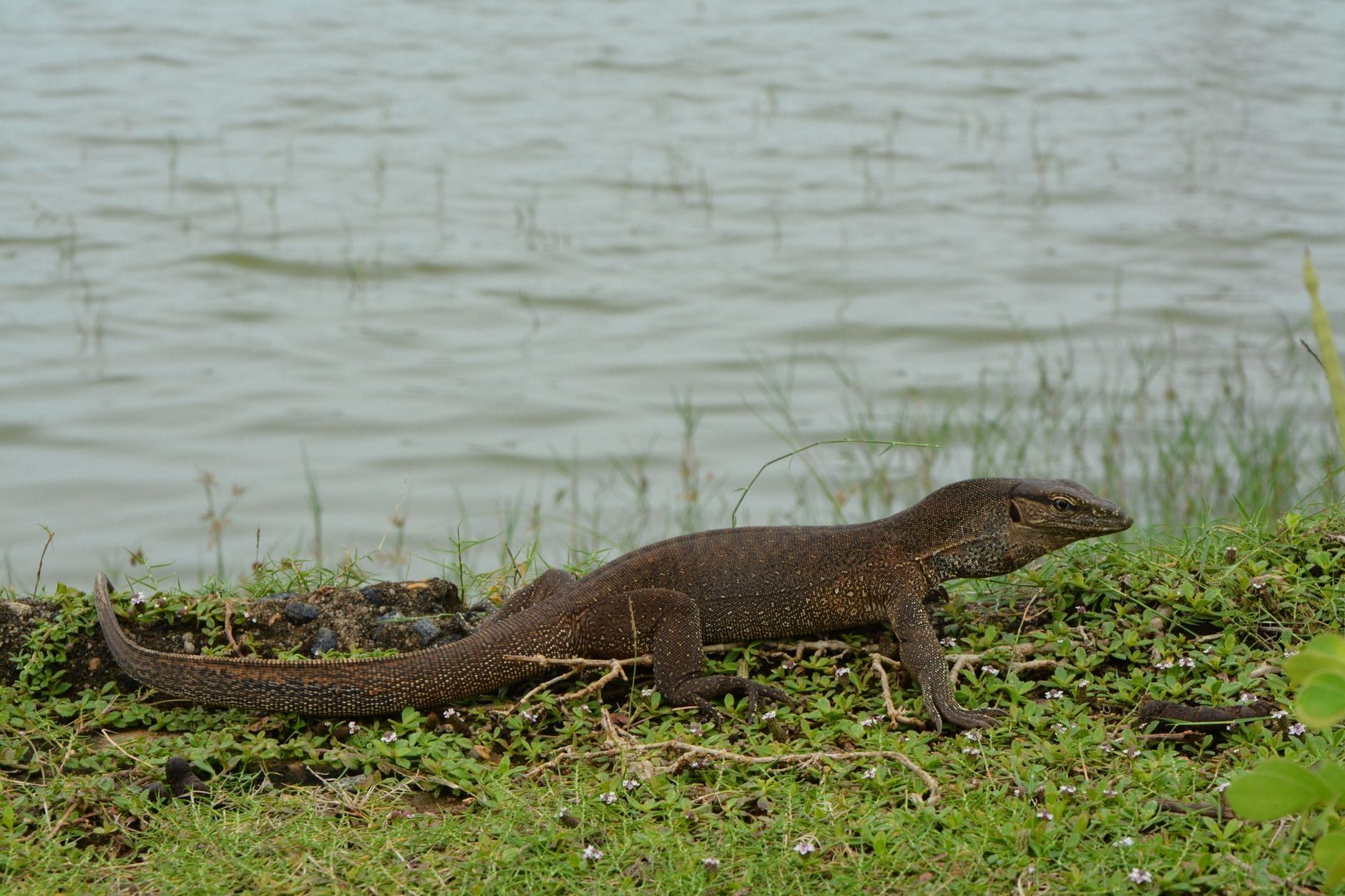
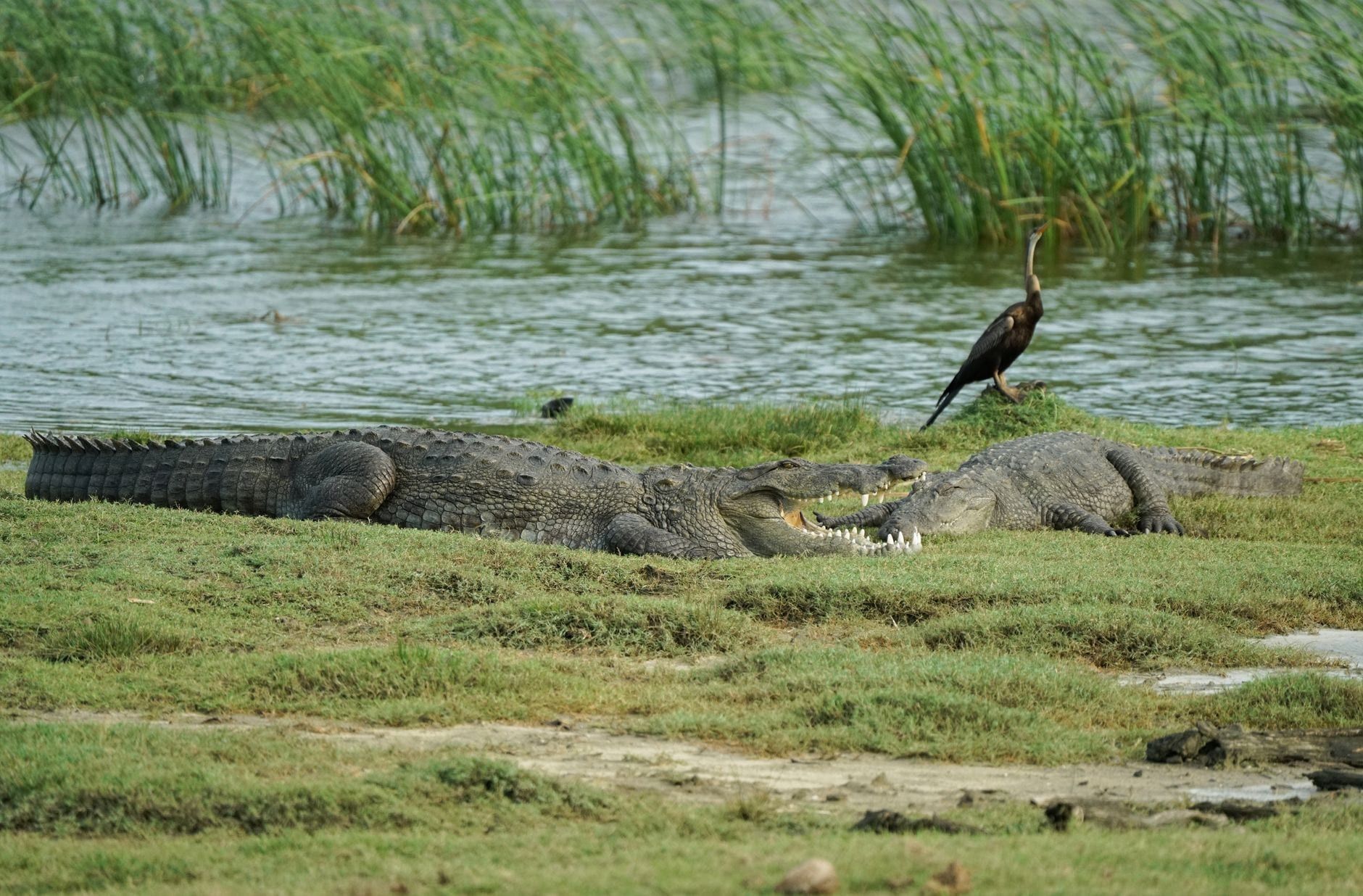
Crocodiles are among the easiest animals in Yala to see. Mugger crocodiles — the freshwater species — bask on the lagoon banks in plain view, jaws open, and saltwater crocodiles patrol the estuaries. Both live in the park's waterways, and a half-day drive without at least one croc is an unusual one. Water monitors do a prehistoric, bow-legged strut across the safari tracks, and the smaller land monitors turn up in the scrub; snakes, including rock pythons, and star tortoises also live here but stay mostly hidden.
The coastal strip adds a marine layer most safari-goers don't expect. Yala's beaches are nesting sites for sea turtles, and the park's boundary runs along a wild, heavy-surf stretch of the Indian Ocean — the safari route reaches the Patanangala outcrop and beach inside the park. Offshore, blue whales are sometimes visible from the coast as a bonus, and dedicated whale-watching trips run from nearby ports if the safari leaves you wanting more.
Birds of Yala: 215 Species, Six Endemics and the Migrant Season
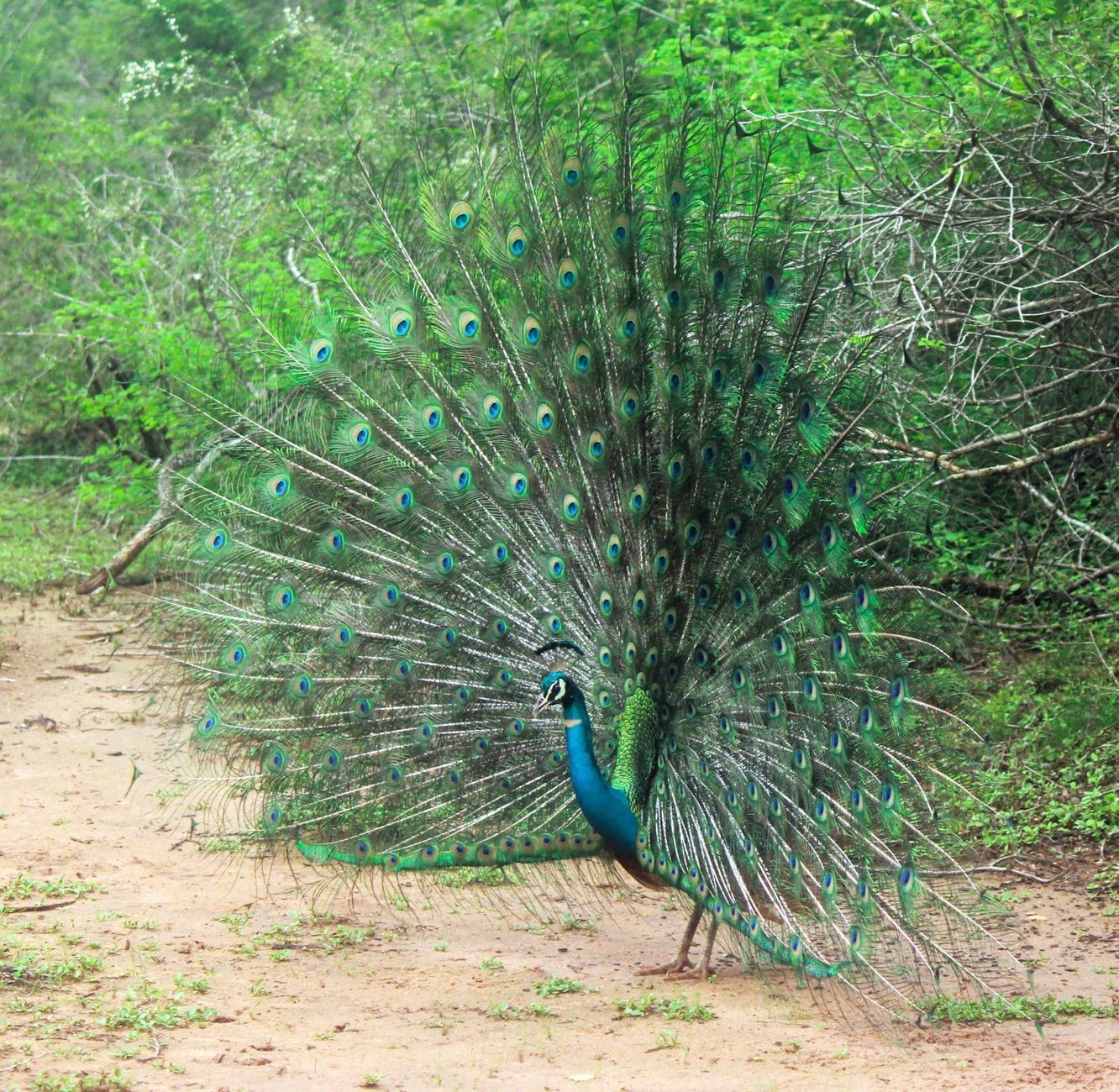
Birds will outnumber mammals on your sightings list, and not marginally. Yala's 215 recorded species include about six found nowhere else but Sri Lanka — among them the Sri Lanka junglefowl (the national bird, absurdly colourful and common in the park), the grey hornbill and the Sri Lanka wood pigeon. The everyday cast is strong too: peacocks fanning their tails in the open grasslands, painted storks and a run of kingfishers and bee-eaters around the lagoons, and hornbills crashing through the canopy.
Raptors are easy to pick up. The crested serpent eagle perches conspicuously on dead trees, and white-bellied sea eagles work the coast. The lagoons are where the numbers get serious: from November to January, migrants arrive from Central Asia and the Himalaya, and the wetlands fill with waterfowl through the northeast monsoon. Two birds matter to listers — the black-necked stork and the lesser adjutant, both rare, both recorded here. Birders should visit in the migrant season and target the lagoons in the first hours after the 6 am opening.
When and How to See the Most Animals: Timing, Gates and Honest Odds
The dry season from February to July is the engine of Yala's sightings. Water levels drop, the lagoons shrink, and everything with a thirst concentrates at what's left — leopards peak between April and July, when low water and short grass make cats easier to find. Birders get their own season from November to January with the migrants. Plan around one fixed risk: the park usually closes for roughly six weeks of maintenance from around September into mid-October, though the closure is decided year by year and some years it stays open — check before you book. Our month-by-month guide to visiting Yala breaks the trade-offs down in detail.
Which drive you take shapes what you see. The park is open 6 am to 6 pm, with a midday closure from 12 to 2 pm and all vehicles out by six. The morning drive from the 6 am opening favours leopards and general predator activity in the cool hours; the afternoon drive from about 2 pm favours elephant herds at the waterholes and golden-hour birdlife. Don't gamble a single drive on the Big Three. Book two or three across a day or two — elephants come free with any drive, a leopard is likely with two, and a sloth bear stays luck no matter what. Current entry fees and the fine print on permits are in our hours and fees guide.
| Animal | Peak months | Best drive | Realistic odds |
|---|---|---|---|
| Leopard | April–July | Dawn, from 6 am | Likely over 2–3 drives |
| Sloth bear | May–July (palu fruit) | Earliest morning | Lucky |
| Elephant | February–July | Afternoon, near water | Near-certain |
| Migratory waterbirds | November–January | Morning, lagoons | Near-certain |
| Deer, buffalo, boar, crocodiles, monkeys | Year-round | Any drive | Near-certain |
Your gate choice is a wildlife tactic, not just logistics. Palatupana is the main entrance to Block I — more than 200 jeeps a day in peak season — while Katagamuwa reaches the same leopard-rich block with roughly 20 to 30 vehicles and is well worth the extra 25 minutes from Tissamaharama. Galge, serving the quieter Blocks IV and V, can give you a whole morning with two or three other jeeps; elephant and bear odds stay good there, though leopard density is lower than Block I. Getting to the right gate on time is its own small project — our directions to Yala covers routes from Colombo, the coast and the hills, and there are also tours from Ella if you're based in the hill country.
Now the uncomfortable part: the jeep jam. A single radio call about a leopard can pull 30 to 50 vehicles into one spot within minutes, and speeding, crowded jeeps are a documented welfare problem in Block I. You can decline to be part of it. Pick an operator that respects distances and speed limits, ask your tracker to skip sightings already thick with vehicles, and linger instead at the waterholes, where quiet patience pays off with elephants, bears, crocodiles and birds. The park's rules back this up: stay in the vehicle, phones on silent, no flash, no honking, never feed anything, and leave every stone and feather where it lies. Neutral-coloured clothing helps you melt into the jeep rather than the view.
The guide makes more difference than any other variable. Every jeep must carry a registered tracker, but trackers vary widely in how hard they work the radio network and how fast they spot a cat on a distant boulder. Most memorable Yala sightings are made, not found. If crowds are your main worry rather than animals, compare parks first: our Yala versus Udawalawe comparison covers the trade-offs for the elephant specialists.
| Yala National Park | Wilpattu National Park | |
|---|---|---|
| Leopard odds | Best in Asia; Block I has the world's densest population | Good chance, but lower density |
| Crowds | Heavy — 200+ jeeps at Palatupana, jams of 30–50 vehicles | Larger park, vehicles spread out |
| Landscape | Scrub, grassland, lagoons and ocean coast | Bigger, wilder, forest and natural lakes (villus) |
| Best for | First-time safari-goers chasing a leopard | Travellers who value quiet over odds |
The short version: Yala wins on sighting probability, Wilpattu wins on atmosphere. If you have two or three days, do both — but if you have one day and you want a leopard, it's Yala, ideally in May or June, through Katagamuwa, on the 6 am drive.
Frequently asked questions
What animals will you definitely see in Yala National Park?
Spotted deer, wild boar, water buffalo, toque macaques, langurs, mugger crocodiles, peacocks and elephants are near-certainties on any drive. A leopard is likely but never guaranteed, and a sloth bear is a genuine bonus.
What are the chances of seeing a leopard in Yala?
The best in Asia, and among the best anywhere — Block I holds an estimated 25 leopards at up to one per square kilometre. Odds climb sharply with two or three drives, dry-season dates (April to July is peak), and a tracker who works the radio network. Some drives still come up empty.
When is the best time to see sloth bears in Yala?
Around May to July, when palu fruit ripens and bears feed in daylight, peaking in June and July. They are shy and nocturnal, so even then a sighting is lucky. The earliest morning drives double your chances.
Are there tigers or lions in Yala?
No. Sri Lanka has neither, which makes the Sri Lankan leopard the island's only big cat and apex predator. That is exactly why Yala's leopards lounge on rocks and cross roads in daylight instead of hiding like their mainland relatives.
What month is best for wildlife in Yala?
February to July, the dry season, when shrinking waterholes concentrate animals; leopards peak April to July. Birdwatching peaks November to January with the migrants. The park usually closes for maintenance from around September into mid-October, decided year by year.
Is Yala better than Wilpattu for seeing animals?
For leopards, yes — Yala has the higher density and better odds, but also jeep jams of 30 to 50 vehicles. Wilpattu is larger, quieter and wilder, with a good chance of leopard and sloth bear but fewer animals in the open.
How many safari drives do you need to see Yala's Big Three?
Plan two or three across one or two days. Elephants are near-certain on any drive, a leopard is likely with two, and a sloth bear takes luck or a palu-season visit in May to July.
How much does a Yala safari cost?
Entry is USD 25 per foreign adult plus a USD 10 group fee per vehicle and 18% tax (children 6–12 pay USD 15). Official jeep hire for Block I runs about LKR 16,900 half-day, so a shared jeep with five or six people costs roughly USD 25–35 each all-in. Confirm whether entry fees are included when booking.